
US Ambassador to India: Cooperation in Space sector moving to joint innovation

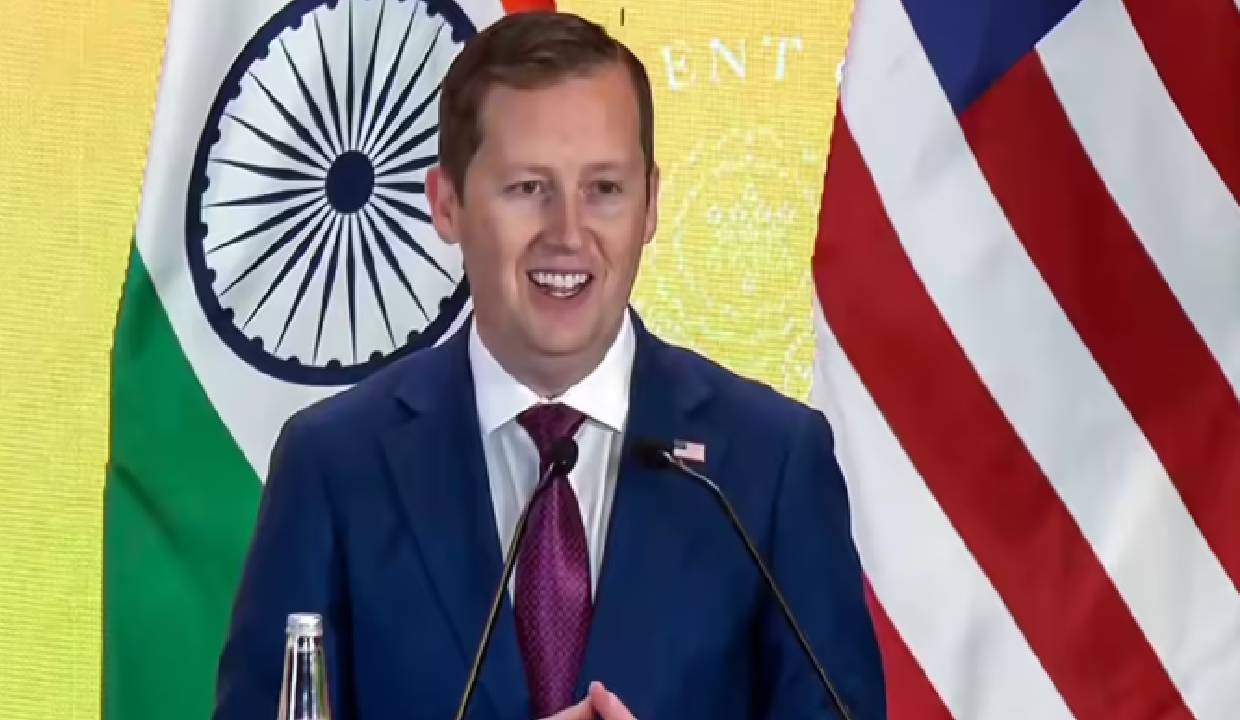
New Delhi, Sept 7: US Ambassador to India Sergio Gor today said his country and India are moving beyond traditional cooperation in the space sector and going towards joint innovation and “co-creation”.
Addressing an event, he highligted growing collaboration in technology, startups, human spaceflight and lunar exploration.
The Ambassador referred to the recently held ninth US-India Civil Space Joint Working Group in Bengaluru, saying the discussions reflected a significant evolution in the bilateral relationship.
“We are no longer just sharing data; we are co-designing instruments, co-funding startups, and co-authoring the future of human discovery,” he said addressing the inaugural ceremony of the ninth Bengaluru Space Expo (BSX).
He said the partnership combined complementary strengths, with the US bringing deep pools of private capital and a mature commercial space ecosystem, while India offered advanced engineering capabilities, scientific talent and a rapidly expanding startup sector.
“This resulting partnership creates a new dream team that can and will do wonders,” Gor said.
The ambassador said US President Donald Trump and Prime Minister Narendra Modi had recognised the potential of this partnership through the TRUST initiative — Transforming the Relationship Utilising Strategic Technology.
Gor also announced the expansion of the US Commercial Service in Bengaluru, aimed at creating a direct commercial link between American companies and Indian innovators.
He said the broader India-US relationship was expanding across several areas, with bilateral trade now exceeding USD 240 billion, alongside cooperation in pharmaceuticals, technology and defence.
Highlighting the practical benefits of joint space missions, Gor pointed to NISAR, the NASA-ISRO Earth observation satellite. He said the satellite’s radar capabilities had demonstrated how bilateral technological cooperation could have an immediate impact during disasters.
“When a devastating earthquake struck Venezuela just two months ago, NISAR’s radar data penetrated dense cloud cover and dust to guide emergency responders directly to ground zero,” he said, describing it as an example of joint technology being used to save lives.
Gor also highlighted Group Captain Shubhanshu Shukla’s journey to the International Space Station last year as another milestone enabled by US-India cooperation.
Following the Axiom-4 mission and five joint scientific investigations, the two countries are now examining areas such as docking standards, interoperability and astronaut training, he said.
“TRUST creates capability. Capability creates ambition,” Gor said.
On lunar exploration, Gor noted that India is a signatory to the Artemis Accords and said NASA had formally invited ISRO to participate in the Moon base programme.
“Make no mistake: we’re going back to the Moon, and we want India by our side on the lunar surface,” he said.
He also credited India’s space-sector reforms with triggering a commercial expansion, particularly in areas such as Earth observation, space situational awareness and launch technologies.
According to Gor, while the Moon represents the destination, the foundation of future space exploration lies in innovation emerging from Indian laboratories, startups and commercial markets.
He encouraged Indian space entrepreneurs to look towards the US market, saying American investors and commercial ecosystems were increasingly open to Indian companies.
“Our investors are watching you. Our ecosystems welcome you. We are here to help you make that leap,” he said.
Gor said Washington and New Delhi were also cooperating on global space governance, including space traffic coordination ahead of the upcoming World Radiocommunication Conference in Shanghai.
He said the two countries were working to preserve an open, rules-based framework for space governance.
“From Bengaluru, let us look upwards. Let us work together to build a global space economy. Let us return to the Moon together,” Gor said. (BVI)
