
West Asia war: Ship movement across Hormuz falling sharply, to hit energy supplies

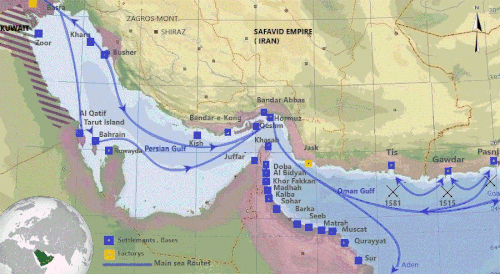
New Delhi, July 17: With West Asia witnessing a major escalation, movement of ships through the critical Strait of Hormuz is falling sharply, which will have a spiral impact on the energy supplies and prices globally.
Vessel traffic through the Strait of Hormuz has dropped to its lowest level in three weeks, underscoring growing concerns over security, crew safety and insurance risks, according to the fresh data from maritime intelligence platform Kpler.
Confirmed Strait of Hormuz crossings fell to just eight vessels on July 16, it reported.
“Strait of Hormuz traffic continued to weaken on 16 July, with confirmed crossings falling to eight, the lowest level in three weeks. Seven of the eight transits used the Iranian route, highlighting a growing concentration of movements through higher risk corridors as operators reassess security, crew safety and insurance exposure. Activity was evenly divided between low risk and sanctioned vessels, with no shadow fleet crossings recorded…”, Kpler said in a post on X.
Daily vessel movements have reportedly fallen from a pre-conflict average of 110-160 ships to a fraction of that level.
The latest decline follows renewed missile exchanges, maritime confrontations and tighter operational restrictions imposed across the region.
The United States has officially reinstated its naval blockade targeting Iranian ports. According to reports, US Central Command (CENTCOM) has taken enforcement action against vessels that failed to comply with the blockade.
This has included firing Hellfire missiles at an oil tanker heading toward Iran’s Kharg Island terminal and boarding multiple vessels in the Gulf of Oman.
The military escalation intensified further after Iranian cruise missile strikes targeted commercial supertankers.
In response, the U.S. launched consecutive nights of airstrikes against Iranian coastal defence systems, missile launch sites, airports and transport infrastructure in southern provinces, including Hormozgan.
Seafarers pulled from high-risk corridor
The deteriorating security environment is prompting governments and shipping companies to keep crews away from the Strait of Hormuz.
India’s Directorate General of Maritime Administration (DGMA) has issued an emergency directive instructing shipping companies and recruitment agencies to suspend the deployment of Indian seafarers on voyages passing through the Strait of Hormuz until further notice.
The sharp decline in vessel traffic suggests that, despite ongoing diplomatic efforts, military developments are increasingly dictating commercial shipping decisions in one of the world’s most critical maritime chokepoints. (BVI)
