
Ex-Japanese Minister blames Indian Govt for delay on Mumbai-Ahmedabad Bullet Train Project
The project has been delayed by over 5 years, leading to huge cost escalation

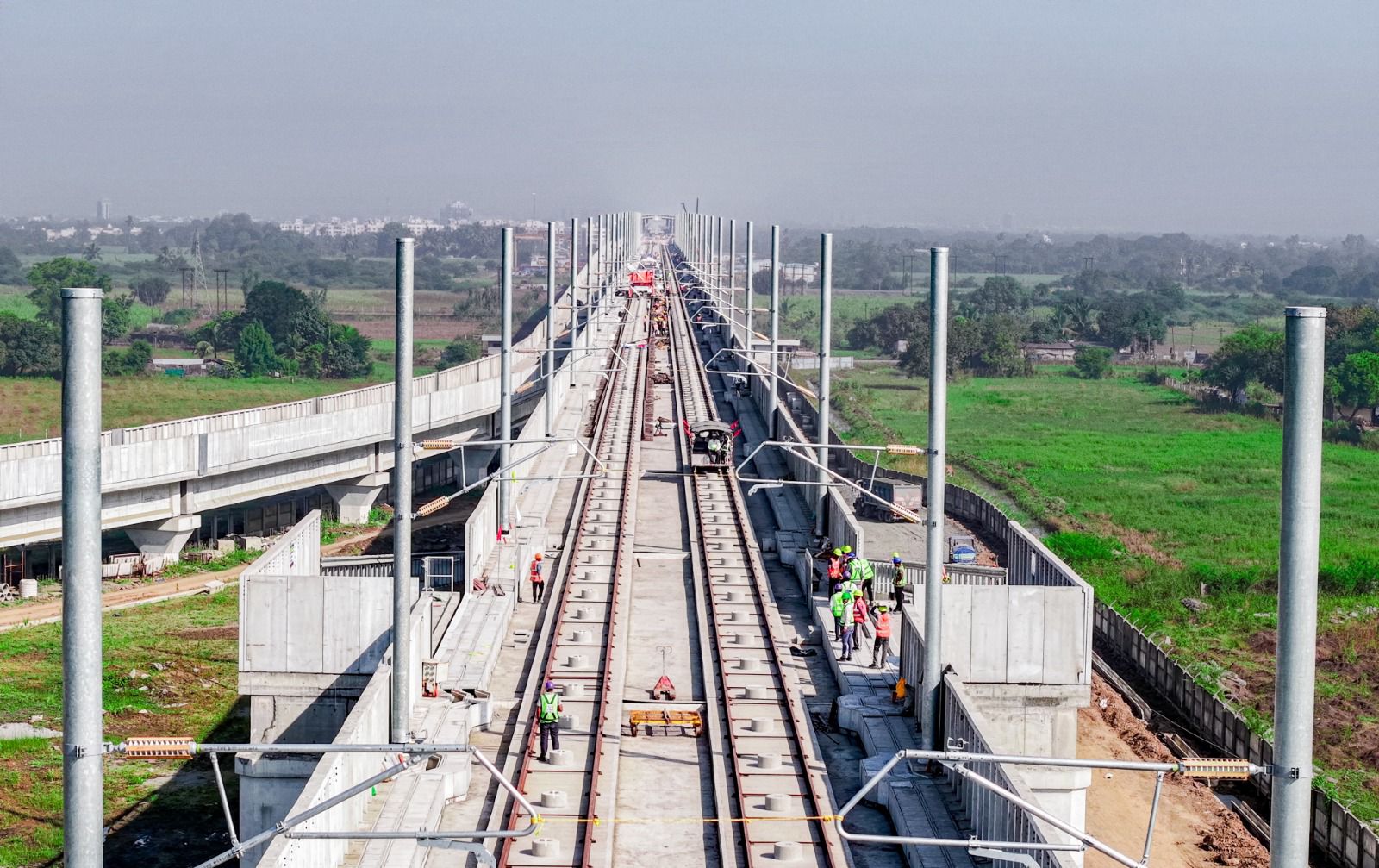
New Delhi, July 17: The much-publicised Mumbai-Ahmedabad Bullet Train Project has become a centerpiece of controversy as a former Japanese minister, “involved” in the programme, has said it has been delayed because of the Indian government.
The Mumbai-Ahmedabad project uses Japanese Shinkansen technology and is partially funded by the Japanese government’s Japan International Cooperation Agency (JICA).
Hideki Makihara, who was Minister of Economy, Trade and Industry in the Shinzo Abe government 7 years back, alleged “sheer recklessness of the Indian side, repeated over and over”.
He has alleged that Indian officials repeatedly failed to honour commitments and pursued “self-interest” during negotiations on the Shinkansen project, known as the Mumbai-Ahmedabad Bullet train project.
The 508-km rail project has been delayed by over 5 years and its partial completion is now expected in August next year.
Makhihara made the comments in a social media post while reacting to an article published on a Tokyo-based website Toyo Keizai Online.
The article, an opinion piece, said the project had diverged from the original Shinkansen model.
“The Shinkansen project in India is something I was involved with myself, but what stood out in international meetings and negotiations was the sheer recklessness of the Indian side, repeated over and over,” Makihara said.
“They just don’t keep promises, no matter what. Even if they make a promise, they flip it right away,” the former Japanese minister added.
Makihara further accused Indian authorities of negotiating solely in their own interest.
Also Read Here About Delay in the Project:
Bullet Train Project: 5-year delay causes huge cost escalation
“They keep pushing their own self-interest right up to the very end. The minister in charge was especially awful. If the top guy’s like that, there’s no way to have any decent dealings,” he said.
“For the honour of all the Japanese folks who poured their hearts into this, I have to say it: I feel 100% that the reason this hasn’t moved forward is entirely on the Indian side.”
Makihara also referred to the opinion piece over which he made the comment and remarked that even Japanese Prime Minister Sanae Takaichi’s visit to New Delhi earlier this month had failed to produce meaningful progress on the issue.
When asked to comment on this, spokesman of India’s Ministry of External Affairs (MEA) Randhir Jaiswal said, “We have seen the post you are referring to. It is an individual opinion, and at considerable variance with facts. India-Japan discussions on the Mumbai-Ahmedabad High Speed Rail are, in fact, progressing well.”
He added that Japan will provide E20 train series, but only in the early 2030s.
“The train in question is under development,” Jaiswal added.
Provocation for Makihara’s Comment:
Makihara posted his comments on X in response to an opinion piece by Isao Tsujimura, a senior Japanese railway engineer and Delhi-based metro vehicle consultant, who argued that India’s first bullet train project has significantly deviated from the original Japanese Shinkansen model.
Tsujimura alleged that Indian officials privately knew that the target of starting operations in 2023 was unrealistic.
Writing after Japanese Prime Minister Takaichi’s July 1-3 visit to India, Tsujimura said discussions with her Indian counterpart, Prime Minister Narendra Modi, covered several strategic issues, including the Mumbai-Ahmedabad High-Speed Rail corridor.
The engineer, in his opinion piece, argued that the project has drifted away from the original Shinkansen vision (an iconic Japanese railway network) that Japan had intended to export to India.
According to Tsujimura, the project initially generated tremendous enthusiasm following its groundbreaking ceremony in Ahmedabad in September 2017. He recalled attending the event as an observer.
“Ahmedabad was filled with excitement, with Japanese and Indian flags flying everywhere,” Tsujimura wrote.
According to the engineer, officials privately knew that the original target of commencing operations in 2023 was unrealistic in India. He further added that both countries initially appeared committed to implementing the project according to Japanese high-speed rail standards.
Much-Awaited Project
The Mumbai-Ahmedabad High-Speed Rail corridor is India’s first Bullet Train project and represents the centrepiece of India-Japan strategic infrastructure cooperation.
The 508-kilometre corridor is proposed to connect Mumbai’s Bandra Kurla Complex with Ahmedabad through 12 stations across Maharashtra, Gujarat and Dadra and Nagar Haveli.
The project is designed for an operational speed of 320 kmph. The line is expected to reduce travel time between the two cities from around eight hours to about two hours.
The Bullet Train project is based almost entirely on Japanese Shinkansen technology.
It incorporates Japanese ballastless track systems, signalling standards, operational safety protocols and train technology.
The corridor is being built with substantial financial assistance from JICA through long-term concessional loans. (BVI)
