NEET-UG Paper Leak: Supreme Court Flags NTA’s Failure To Learn From Past Lapses, Seeks Centre And CBI Response

Recover your password.
A password will be e-mailed to you.

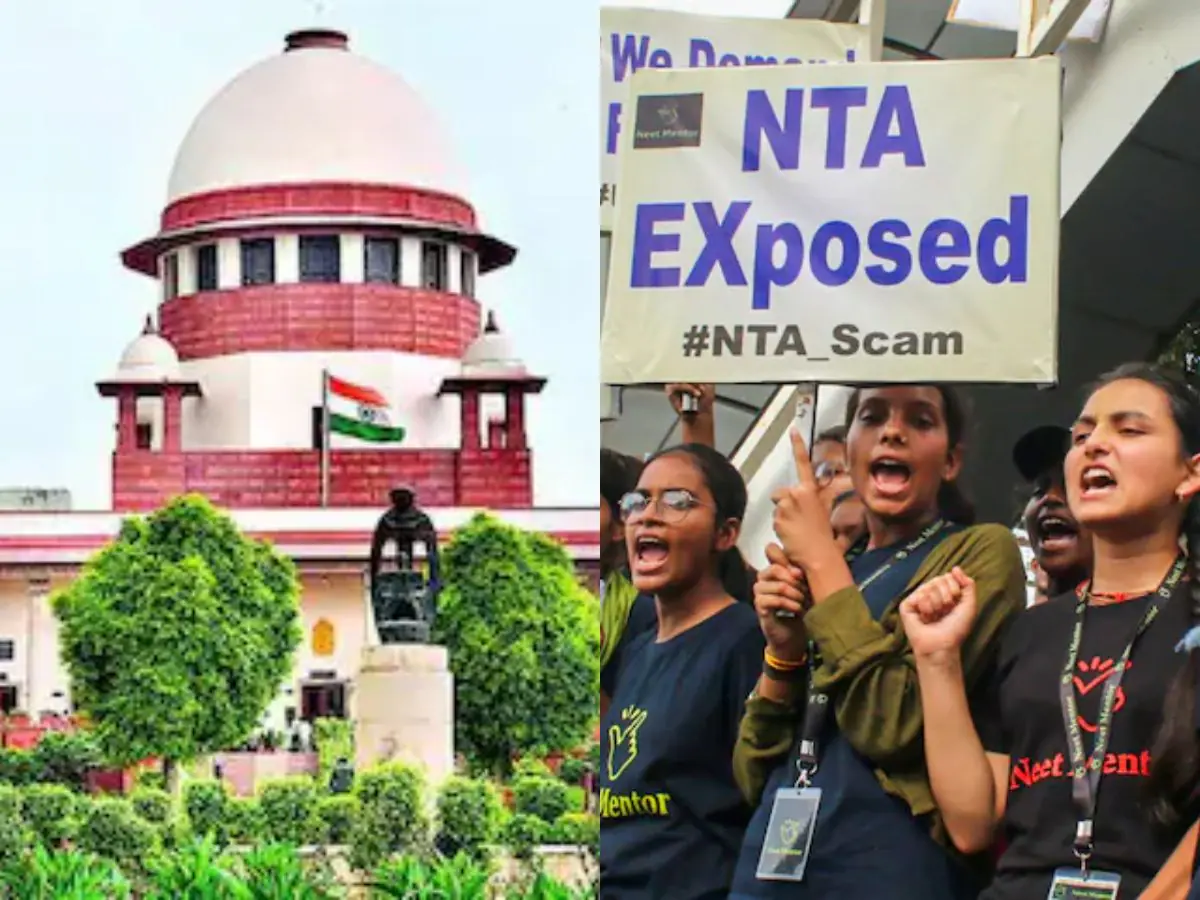
New Delhi, May 25: The Supreme Court has expressed strong concern over repeated irregularities in the NEET-UG examination process, observing that the National Testing Agency (NTA) has failed to learn lessons from earlier paper leak incidents.
The court has sought responses from the Centre, the NTA, and the Central Bureau of Investigation (CBI) on petitions demanding structural reforms or replacement of the testing body.
A bench comprising Justices PS Narasimha and Alok Aradhe criticised the handling of the examination system, noting that the issue had already been examined by the court earlier and that a monitoring committee had made several recommendations.
The court observed that it was “sad” that corrective measures suggested in the past did not appear to have been fully implemented. It directed the NTA to file an affidavit detailing the steps taken to comply with previous court-approved recommendations.
The bench also ordered that all related petitions be clubbed together for unified hearing, ensuring consistent judicial consideration of overlapping concerns.
The case was triggered by a petition filed by the Federation of All India Medical Association (FAIMA), which argued that repeated incidents of paper leaks and irregularities in NEET-UG have undermined the credibility of the examination system.
The petition, filed through advocate Tanvi Dubey, has sought either the restructuring or complete replacement of the National Testing Agency with a more autonomous and robust institution capable of conducting high-stakes national examinations securely.
The association has also claimed that repeated breaches in examination integrity constitute a serious violation of the fundamental rights of over 22 lakh students appearing for NEET-UG.
The Supreme Court has also issued notices to the Centre and the CBI, directing them to respond to allegations surrounding the latest NEET-UG examination controversy.
Additionally, the court has asked a committee headed by former ISRO chief K. Radhakrishnan, which was previously tasked with reviewing NTA’s functioning, to submit details on the implementation of its recommendations.
The court emphasised the need for transparency in addressing systemic weaknesses in examination management and security protocols.
The petitioners have urged the court to establish a high-powered interim monitoring committee until a new examination authority is formed. The proposed body would include a retired Supreme Court judge as chairperson, along with cybersecurity and forensic experts.
This committee, they argue, would help ensure tighter safeguards against leaks and irregularities in future national-level entrance examinations.
The undergraduate National Eligibility cum Entrance Test (NEET-UG), conducted by the National Testing Agency on May 3, was later cancelled on May 12 following allegations of a paper leak.
The case is now under investigation by the CBI, adding to growing scrutiny over exam security mechanisms and the reliability of large-scale digital and offline testing systems in India.
The Supreme Court’s remarks underscore mounting pressure on the examination authority to restore trust and prevent repeated disruptions affecting millions of students across the country.

This website is about News related to Business, Economy and Corporates in India and beyond.
Recover your password.
A password will be e-mailed to you.