
British Whisky, Cars, Chocolates to get cheaper as India-UK FTA comes into effect today

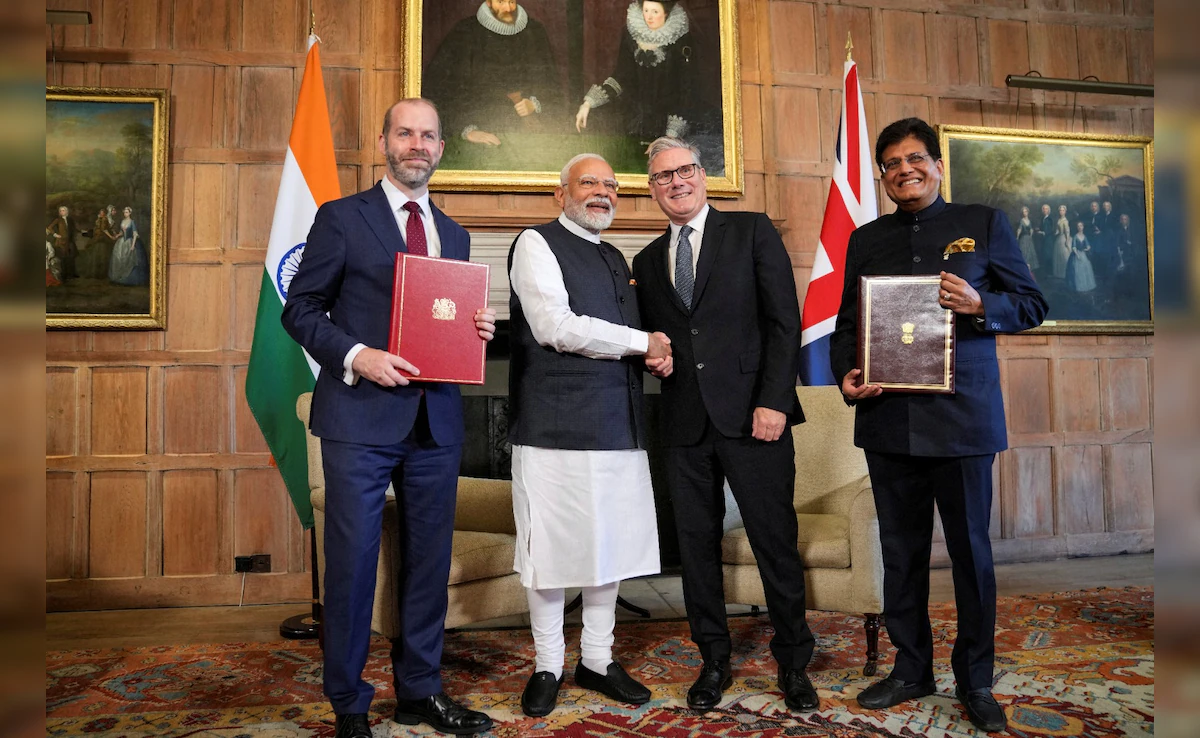
New Delhi, July 15: British Whisky, cars, chocolates and several other items are set to become cheaper in India as the Free Trade Agreement (FTA) is coming into effect from today.
The FTA, officially known as the India-UK Comprehensive Economic and Trade Agreement (CETA), was signed in July last year after 14 rounds of negotiations.
Spread across 30 chapters, the pact also covers digital trade, financial services, intellectual property, innovation, government procurement and the movement of professionals.
While consumers are likely to notice cheaper British products such as Scotch whisky, chocolates and premium cars over time, the agreement’s biggest gains are expected to come from greater market access for Indian exporters, professionals and businesses.
One of the biggest consumer-facing changes is lower duties on British alcoholic beverages.
Import duty on Scotch whisky will fall from 150% to 75% immediately and will reduce further to 40% over the next 10 years. Gin will receive similar tariff benefits.
This does not necessarily mean prices will fall overnight, as retailers and importers will decide how much of the duty reduction is passed on to consumers. But over time, premium British spirits are expected to become more affordable in India.
The FTA also will make cars made in UK cheaper in India as import duties on fully built UK vehicles, currently as high as 110%, will gradually decline to 10% over a 10-year period under a quota-based system.
Electric and hybrid vehicles will also receive preferential access, but only through quotas designed to protect India’s domestic automobile industry during its transition to electric mobility.
Chocolates, Biscuits, Cosmetics
The agreement reduces tariffs on several everyday British consumer products.
These include chocolates, sweet biscuits, cosmetics, soft drinks and other packaged food items.
Like whisky, these products are expected to become gradually cheaper as tariff cuts are implemented over the coming years.
For Indian Exporters
The biggest gain from the agreement is expected to be for Indian exporters.
The UK will eliminate import duties on around 99% of tariff lines, covering almost the entire value of India’s exports.
This gives Indian companies easier access to one of their biggest overseas markets and helps them compete on better terms with exporters from countries that already enjoy preferential trade access.
Several export-oriented sectors are expected to benefit immediately.
Among them are:
- Textiles and garments
- Marine products
- Leather goods
- Footwear
- Sports goods
- Toys
- Gems and jewellery
- Engineering goods
- Auto parts and engines
- Organic chemicals
Many of these industries are labour-intensive and employ millions of people across India, making the agreement particularly important for manufacturing and exports.
Indian professionals
The Double Contributions Convention also comes into force today.
Under this arrangement, eligible Indian professionals working temporarily in the UK will no longer have to contribute simultaneously to social security systems in both countries.
Instead, those contributions can continue to be credited to their provident fund accounts in India.
Commerce Minister Piyush Goyal has earlier said eligible workers could save nearly 25% of their salaries that would otherwise have gone towards UK social security contributions, while continuing to earn interest in their PF accounts.
Products protected
The agreement does not open every sector.
India has excluded several sensitive agricultural products from tariff concessions to protect domestic farmers.
These include:
- Dairy products
- Apples
- Cheese
- Sugar
- Milled rice
- Pork
- Chicken
- Eggs
These products will continue to attract existing duties and remain outside the scope of tariff reductions.
Beyond Goods
Unlike older FTAs that focused mainly on tariffs, the India-UK agreement covers a much wider range of sectors.
Its 30 chapters include provisions on:
- Digital trade
- Telecommunications
- Financial services
- Intellectual property
- Innovation
- Small and medium enterprises (SMEs)
- Sustainability
- Transparency
- Government procurement
- Rules of origin
- Temporary movement of professionals
- Trade and gender equality
It also includes a dedicated innovation chapter aimed at strengthening research, technology commercialisation and resilient supply chains.
Future Path
According to Commerce Ministry data, merchandise trade between India and the UK rose to $25.13 billion in FY26 from $23.13 billion in FY25.
India exported goods worth $13.44 billion to the UK during FY26, while imports from the UK jumped over 36% to $11.68 billion. As a result, India’s trade surplus with the UK narrowed to $1.76 billion from $5.97 billion a year earlier.
The UK estimates the agreement could increase bilateral trade by nearly £25.5 billion annually in the long run.
Its exports to India are projected to rise by almost 60%, while imports from India could increase by about 25% by 2040. (BVI)
