
India’s Ports See 2% Fall in EXIM Cargo as West Asia Tensions Disrupt Trade

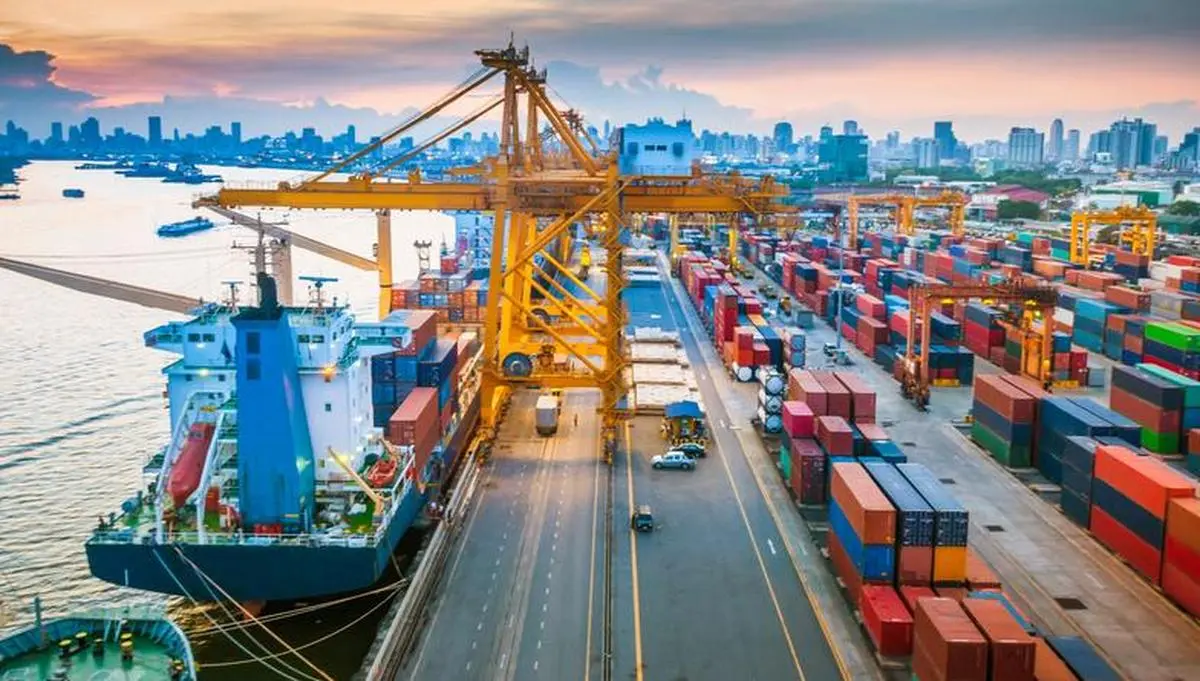
New Delhi, May 24: India’s port sector recorded a marginal decline in April as major and non-major ports together saw around a 2 per cent year-on-year drop in international cargo volumes.
The slowdown was largely driven by geopolitical tensions in West Asia, which disrupted key shipping routes and impacted the movement of energy-linked cargo such as crude oil, fertilisers and coal. Despite this, growth in coastal shipping helped stabilise overall port activity.
West Asia Conflict Disrupts Energy Trade Routes
Rising tensions involving the US, Israel and Iran have intensified uncertainty around the Strait of Hormuz, one of the world’s most critical maritime chokepoints. Since a large share of global crude oil passes through this route, including shipments bound for India, disruptions have directly affected energy logistics and increased volatility in shipping operations. India’s dependence on West Asian crude made petroleum cargo one of the most impacted segments across ports.
Overall Cargo Volumes Show Mild Contraction
India’s major ports handled around 73 million tonnes of cargo in April, while non-major ports processed approximately 59.5 million tonnes. The overall decline in EXIM activity reflects weaker global trade flows and cautious shipping behaviour amid geopolitical instability. Several ports reported reduced volumes, with Deendayal Port Authority witnessing an 11 per cent fall in overseas cargo. Other ports including Cochin, New Mangalore, Paradip and Kolkata also recorded declines, indicating broad-based softness in international trade movement.
Gujarat Maritime Board Ports See Decline in Key Commodities
Ports under the Gujarat Maritime Board, including major hubs like Mundra and Pipavav, collectively handled about 32 million tonnes of cargo, marking a 2 per cent year-on-year decline. The drop was primarily driven by reduced shipments of crude oil, coal and fertilisers, which are highly sensitive to global price fluctuations and supply chain disruptions. This shows that even India’s busiest industrial port clusters were affected by global uncertainty.
JNPA and Mumbai Ports Show Relative Strength
In contrast to the overall slowdown, Jawaharlal Nehru Port Authority and Mumbai Port performed relatively better, jointly handling over 15 million tonnes of cargo. However, this increased throughput also led to congestion at terminals, as rerouted shipments and concentrated trade flows added pressure on infrastructure. These operational challenges highlighted the uneven impact of global trade disruptions across different ports.
Government Moves to Ease Port Congestion
To manage rising operational pressure, the government intervened by reviewing congestion at major ports and introducing measures to improve logistics efficiency. Steps such as waiving certain terminal handling and transport-related charges were implemented to reduce costs for exporters and importers. These efforts aim to ensure smoother cargo movement and prevent further disruptions in trade flows amid global uncertainty.
Coastal Shipping Provides Stability to Port Activity
While international trade faced headwinds, domestic coastal shipping emerged as a key stabilising factor for the sector. Coastal cargo movement increased significantly, with major ports recording a 17 per cent rise and non-major ports seeing a 6 per cent increase. This growth in inland maritime transport helped offset the decline in EXIM cargo and maintained overall throughput stability across India’s port network.
