
India’s first Hydrogen-fuelled train: Here are some details about it

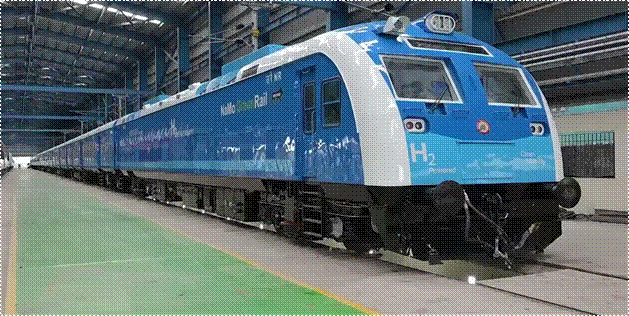
The train, that will run between Jind and Sonipat in Haryana, will have an operational speed of 75 kmph and a design speed of 110 kmph.
The train generates its own electricity onboard using hydrogen, unlike conventional electric trains that draw power from overhead lines.
Tthe Hydrogen Fuel Cell Trainset generates electricity onboard through a chemical reaction between hydrogen and oxygen, with water vapour as its only by-product.
In a sense, the train once again carries its own source of power, as steam and diesel locomotives once did.
But instead of burning traditional fuels such as coal or diesel, hydrogen generates electricity inside the train using oxygen from the atmosphere, eliminating combustion and dependence on an external power supply.
As electricity is generated onboard through clean hydrogen technology, the train represents the greenest form of rail propulsion, powering the future of sustainable mobility.
To complement this advanced propulsion system, the train is equipped with multi-layer safety systems capable of detecting hydrogen leaks, heat, flames and smoke.
Most hydrogen passenger trains currently operating globally comprise only two or three coaches and are primarily deployed on short regional routes.
In contrast, the Indian Railways trainset has been configured as a 10-coach passenger train with a capacity of around 2,600 passengers, demonstrating the scalability of hydrogen-powered rail transport for high-capacity passenger operations.
Designed, engineered and integrated in India, the train has been developed using indigenous technology, reflecting the country’s growing capabilities in advanced railway engineering, according to the Railways.
The trainset has been developed under the leadership of Indian Railways, with Research Designs and Standards Organisation (RDSO) formulating the technical specifications and leading the design approval process.
The trainset has been integrated by M/s Medha Servo Drives, while Integral Coach Factory (ICF) contributed to the train’s theme and exterior design.
Complementing the rolling stock, Indian Railways has established a complete hydrogen ecosystem at Jind, comprising hydrogen production through electrolysis, storage, compression and dispensing infrastructure to support train operations. (BVI)
