
German business community has big expectations from India-EU Free Trade pact

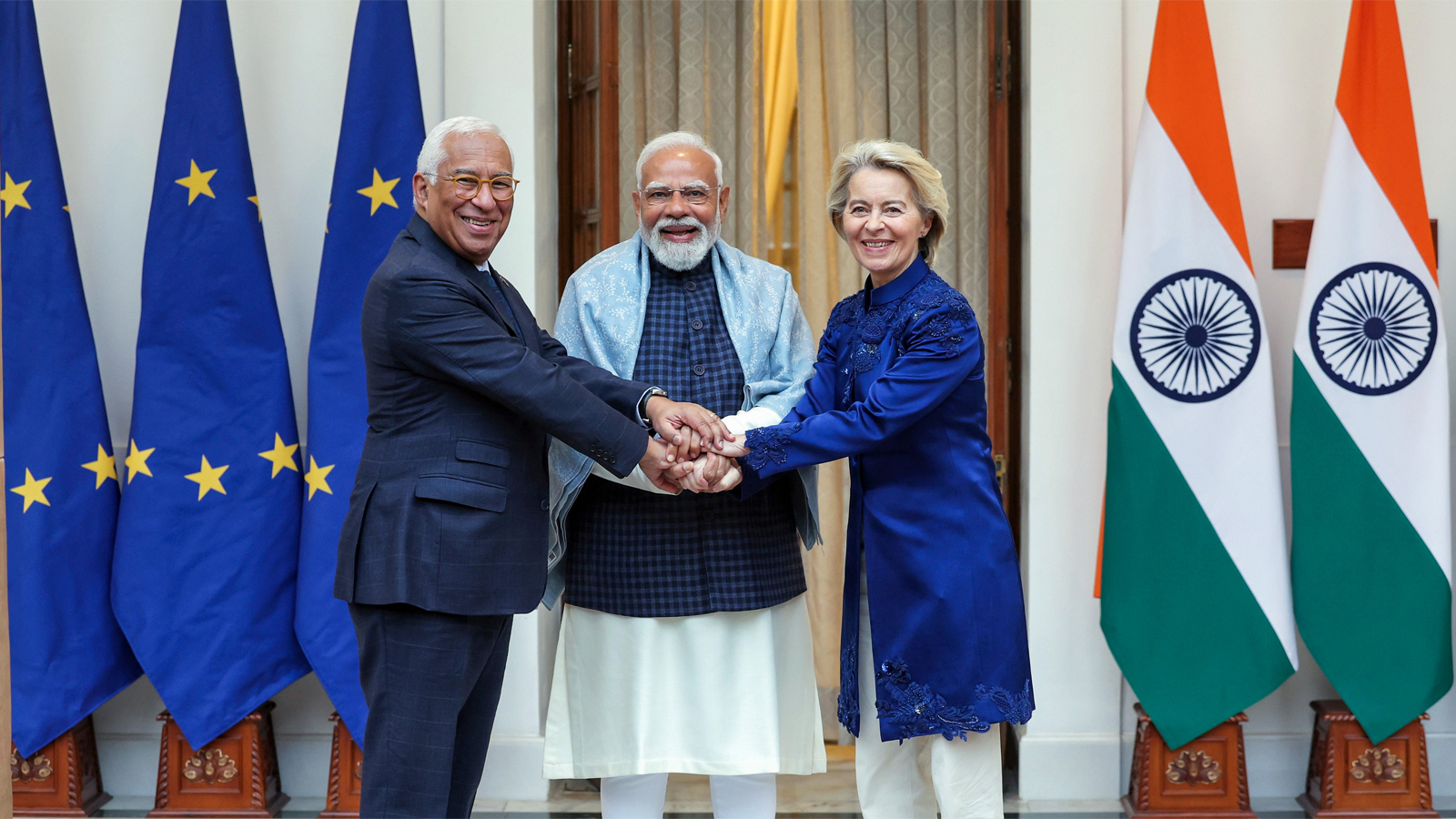
New Delhi, Aug 14: The Free Trade Agreement (FTA) between India and the European Union (EU), signed on January 27 this year, has stirred a lot of interest among the business community of Germany, which is a key member of the European countries.
This was stated by Alexandre Callegaro, Minister Counsellor and Head of Economic and Global Affairs at the German Embassy at an event here.
He said the German business community has shown major interest in the agreement and cited a survey by the Indo-German Chamber of Commerce and Industry that found 96 per cent of respondents expected the FTA to have a positive impact on their businesses in India.
More than one-third of German companies surveyed expected the agreement to provide a very strong boost, reflecting expectations of improved market access, lower trade barriers and a more favourable business environment.
Around 26 per cent of German companies in India plan to expand local production, while 25 per cent intend to increase exports from India and 21 per cent are pursuing partnerships and investments.
Germany already has around 2,000 companies operating in India, and Callegaro said the FTA could help expand this presence further.
He added that German companies had announced investments of nearly €6 billion in India in recent years.
The agreement is particularly significant for sectors such as automobiles, machinery, electrical equipment and medical devices, where India has maintained relatively high tariffs on European products.
Darpan Jain, Additional Secretary in the Ministry of Commerce and Industry, said the FTA is designed as a comprehensive framework covering goods, services and rules affecting trade, rather than merely a tariff-reduction agreement.
The pact contains 20 chapters and addresses areas including e-commerce, intellectual property, anti-corruption and anti-fraud provisions.
He highlighted the complementary nature of the two economies. India brings strengths in labour-intensive manufacturing and skills, while Europe has capabilities in advanced technology, machinery and precision equipment.
Jain pointed to automobiles and machinery as examples. Indian tariffs on automobiles can reach 110 per cent, while the agreement provides for tariffs to decline to 10 per cent under a quota over time. Machinery tariffs, which can reach 44 per cent, will be eliminated on almost all products.
For India, the agreement could also improve competitiveness by making advanced European machinery and equipment more accessible. Jain said this could allow Indian companies to integrate more deeply into global value chains, manufacture components locally and potentially re-export them to European and other markets.
On the export side, he highlighted textiles, apparel, leather, footwear and marine products as areas where Indian companies could gain from improved access to the European market. More than USD 33 billion of Indian exports in labour-intensive sectors are expected to benefit from duty-free access from the agreement’s entry into force.
Federation of European Business in India (FEBI) Secretary General Sonia Prashar said European companies were increasingly asking not whether India had potential, but why India should not be a strategic priority now.
According to the FEBI Business Sentiment Survey cited by her, 95 per cent of European companies planned to expand their operations in India, while nearly 90 per cent said their Indian operations were already profitable.
She said the FTA comes at a time when European businesses are seeking to diversify supply chains and reduce dependence on single-source suppliers following the disruptions caused by the COVID-19 pandemic and geopolitical conflicts.
The EU-India economic relationship is already substantial. EU-India goods trade stood at €120 billion in 2024, while services trade reached €59.7 billion in 2023.
Around 6,000 EU businesses operating in India generate an estimated 3.7 million direct jobs, according to Prashar.
Under the agreement, the EU will eliminate or reduce tariffs on more than 96 per cent of its goods exports, while India will provide preferential access across a large share of its tariff lines.
The European Commission estimates that the pact could save European exporters around €4 billion annually in duties.
Callegaro said the legal review was progressing and expressed optimism that the agreement could be signed by December and enter into force in the first half of 2027, subject to the required procedures.
However, the real test would be implementation. Jain said businesses would need to move beyond the headline tariff reductions and identify specific products, services, partnerships and supply-chain opportunities.
Callegaro called for companies to familiarise themselves with the agreement’s market-access provisions once the final text is published. The focus now, he said, must shift from negotiating the agreement to ensuring that businesses are able to use it effectively. (BVI)
