
On Independence Day, PM talks about progress in various sectors

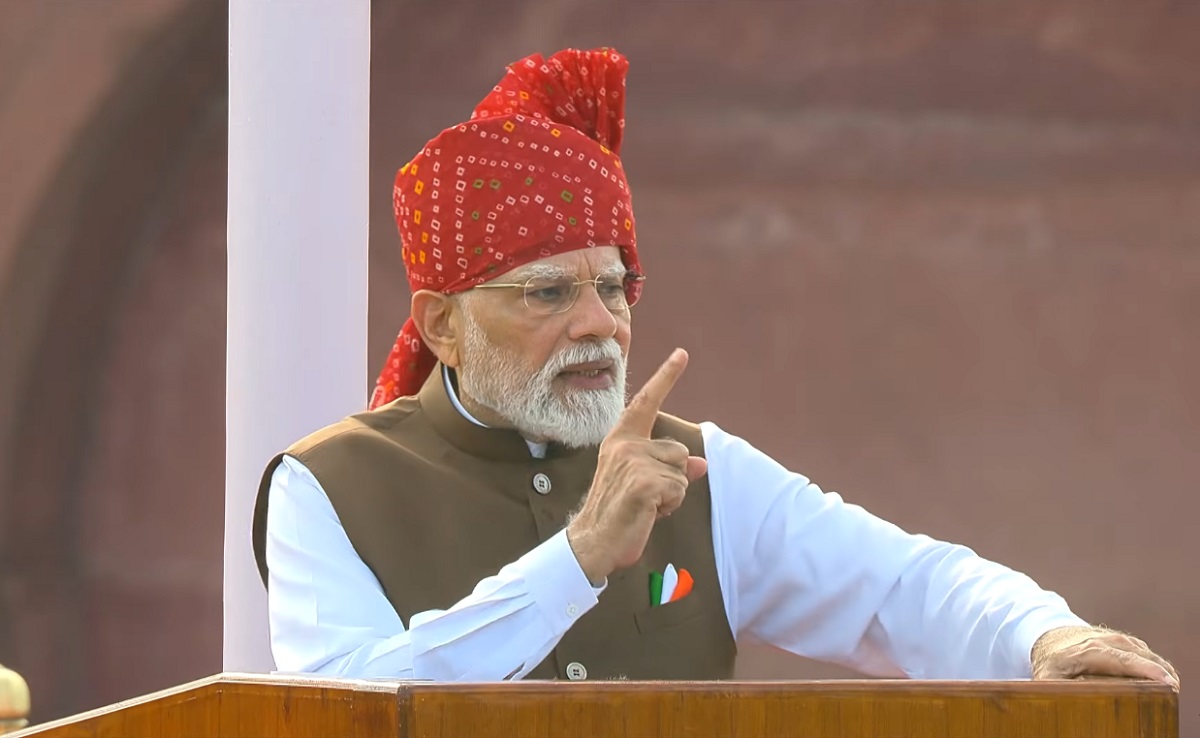
New Delhi, Aug 15: Prime Minister Narendra Modi today talked about the country’s journey towards becoming a developed nation by 2047, saying that progress was being made in various sectors including manufacturing, semiconductors, energy and digital infrastructure.
In his address from the Red Fort on the 80th Independence Day, Modi said India had moved from the “Fragile Five” to one of the fastest-growing major economies over the past 12 years and now needed to raise its ambitions further.
He said the goal of a Viksit Bharat by 2047 would require India to build globally competitive companies, strengthen domestic capabilities and reduce dependence on foreign supplies.
He talked about plans to establish five to eight additional semiconductor plants over the next seven to eight years, building on three facilities that have already begun production and exports.
Calling chips critical to the modern digital economy, Modi said semiconductors were essential for electronics, medical devices and transportation systems.
The Prime Minister linked the semiconductor push with the broader expansion of India’s manufacturing base.
Electronics manufacturing has increased nearly sevenfold over the past 12 years, while mobile phone production has risen 33-fold and defence production has grown fourfold, he said.
Modi also pointed to the growth of India’s digital economy, saying internet users have quadrupled and digital transactions have expanded 100 times over the past decade. Patent grants, he added, have also increased fourfold.
Talking about energy security, he announced a target of 200 GW of nuclear power capacity and plans for five new nuclear reactors.
Modi also referred to the SHANTI Act passed by Parliament and reiterated the government’s earlier ambition of reaching 100 GW of nuclear capacity by 2047. The new 200 GW target represents a significant escalation in the scale of nuclear expansion envisaged for the country.
India currently has 25 nuclear reactors across seven locations, with an installed capacity of 8,880 MW. Eight additional reactors with a combined capacity of 6,600 MW are under construction, while 10 more projects totalling 7,000 MW are at the pre-project stage.
The Prime Minister warned that geopolitical tensions were exposing the vulnerabilities created by dependence on overseas supplies of critical resources.
Without naming any country, he said fuel, medicines and technology were increasingly being used as instruments of geopolitical pressure, while strategic geographical routes were also being “weaponised”.
Modi said India needed to strengthen domestic energy capabilities and reduce its exposure to external shocks.
India currently imports nearly 90 per cent of its crude oil requirements and around half of its natural gas needs.
The Prime Minister cited the expansion of domestic energy infrastructure as another indicator of the country’s changing economic landscape.
Piped cooking gas coverage, he said, has expanded from 70 cities to 700 cities, while the number of households receiving the fuel has risen to 1.75 crore from 22 lakh in 2014.
Solar power generation capacity has also increased sharply, from around 2 GW a decade ago to 160 GW, he highlighted during his speech.
The Prime Minister also highlighted the transformation in manufacturing and infrastructure over the past 12 years.
Modern railway coach production has increased 21-fold, while defence production has quadrupled and electronics manufacturing has expanded sevenfold, he said.
India’s internet user base has grown four times and digital transactions have increased 100 times. Patent grants have also risen fourfold, reflecting what Modi described as a broader shift towards innovation and technology-led growth.
He also pointed to a 15-fold increase in the annual pace of tap-water connections and the expansion of metro networks and public housing as evidence of improvements in basic infrastructure and urban services.
Modi said economic and manufacturing expansion had been accompanied by structural reforms in governance.
Thousands of compliance requirements have been eliminated and outdated laws repealed, he said, arguing that modern India cannot be governed through regulations designed for an earlier era. (BVI)
