
Delhi–Lucknow In 2 Hours? Inside Varanasi Bullet Train Corridor

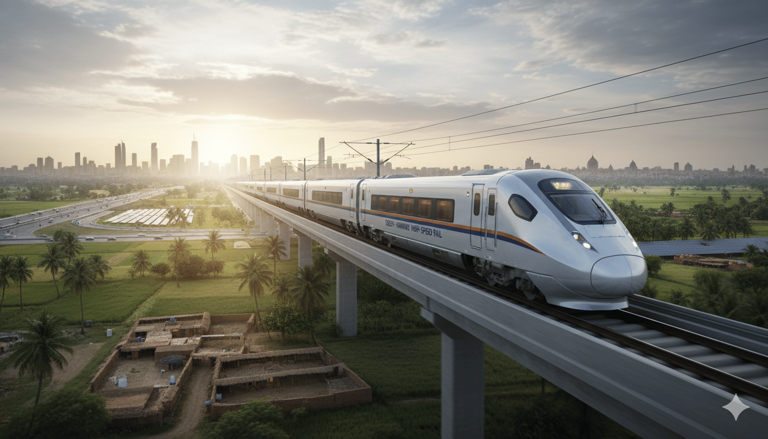
New Delhi, May 12: India’s high-speed rail plans are set for a major expansion with the proposed Delhi–Varanasi bullet train corridor, which is expected to pass through Lucknow and significantly reduce travel times across key northern cities. The project was announced in the Union Budget 2026–27 as part of a broader push to develop multiple high-speed rail corridors across the country.
Major Travel Time Reductions Planned
The proposed corridor is expected to dramatically cut journey durations:
- Delhi to Lucknow: ~2 hours (from over 6 hours currently)
- Delhi to Varanasi: ~3 hours 50 minutes (as projected by officials)
At present, premium trains like the Vande Bharat Express and Shatabdi Express take over 6 hours between Delhi and Lucknow, making the proposed upgrade one of the most significant rail-time reductions in India’s history.
Route And Economic Impact
The proposed Delhi–Varanasi corridor is expected to pass through Lucknow, creating a high-speed connectivity spine across Uttar Pradesh.
Officials believe the project could:
- Integrate cities like Varanasi, Lucknow, and Delhi into a single economic zone
- Boost trade, logistics, and workforce mobility
- Strengthen industrial and urban linkages in northern India
Railway authorities have suggested that faster rail travel could eventually compete with short-haul air routes due to convenience and reduced total travel time.
Part Of A Larger High-Speed Rail Expansion
The Delhi–Varanasi line is one of several planned corridors under India’s expanding bullet train network. The National High-Speed Rail Corporation Limited (NHSRCL) has been tasked with preparing and revising Detailed Project Reports for multiple routes.
Other proposed high-speed rail outcomes include:
- Mumbai–Pune: ~28 minutes
- Pune–Hyderabad: ~1 hour 55 minutes
- Hyderabad–Bengaluru: ~2 hours
The only operational mega project currently under construction is the Mumbai–Ahmedabad High-Speed Rail Corridor, India’s first bullet train line.
Shift In India’s Transport Future
With multiple corridors under planning, India is accelerating its shift toward high-speed rail as a long-term mobility solution. Officials say the goal is to reduce congestion, improve regional connectivity, and modernise inter-city transport infrastructure.
If completed as envisioned, the Delhi–Varanasi corridor via Lucknow could become one of the most transformative transport projects in northern India.
