
West Asia conflict escalates: PM Modi chairs meeting of Economic Advisory Council

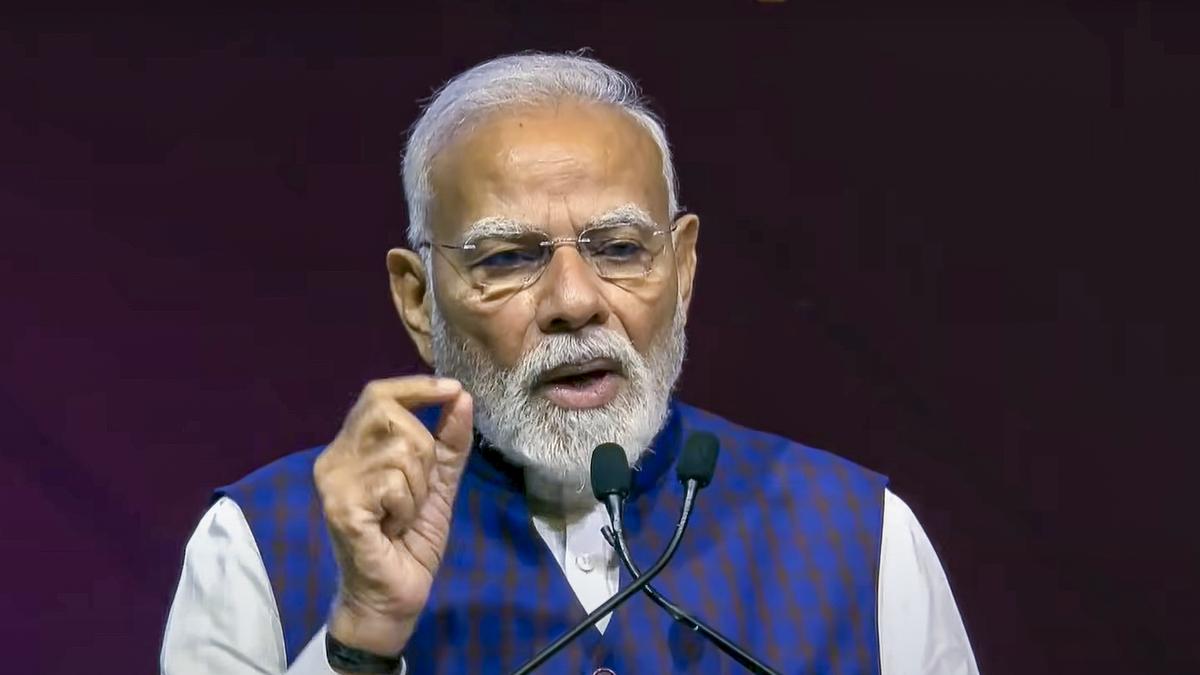
New Delhi, June 6: Amid the global uncertainties and energy supply disruptions due to the West Asia conflict, Prime Minister Narendra Modi today chaired a meeting with members of his Economic Advisory Council to discuss strategies to meet the challenge.
Several ideas and suggestions are believed to have been deliberated upon at the meeting with thrust on ensuring that India’s growth does not suffer and its economy is affected the minimum possible.
The meeting of the Economic Advisory Council to PM (EAC-PM) reviewed the ongoing developments having impact on economic areas and explored ways to accelerate development while maintaining macroeconomic stability.
Members of the EAC-PM shared their assessments of the evolving international economic environment and its potential implications for India due to the ongoing conflict in West Asia which has hit global markets, trade flows, energy security and economic growth.
The meeting comes at a time when economies around the world are grappling with geopolitical tensions, supply chain disruptions and uncertainty in international markets due to the US-Iran conflict and the closure of the Strait of Hormuz.
US-Iran conflict escalates
The fuel supplies from West Asia remain disrupted as the conflict between the US and Iran has started escalating again over the last few days, after a lull in fighting for nearly two months.
The US escalated the conflict by launching fresh attacks on Iran, which has been retaliating by targeting American assets in the Gulf region,, particularly in the Strait of Hormuz and in Kuwait.
The US military today said it intercepted four Iranian drones that were allegedly launched toward the Strait of Hormuz.
According to US Central Command, the drones posed an immediate threat to maritime traffic in the strategically vital waterway, through which a significant portion of the world’s oil and natural gas shipments pass.
“The attack drones posed an immediate threat to regional maritime traffic,” the command said in a statement posted on social media.
The latest exchange has heightened concerns about the stability of an already fragile ceasefire and raised fears of renewed confrontation between the two countries.
