
The 10-Minute House help Revolution: Home Services Apps Cross 10 Million Users

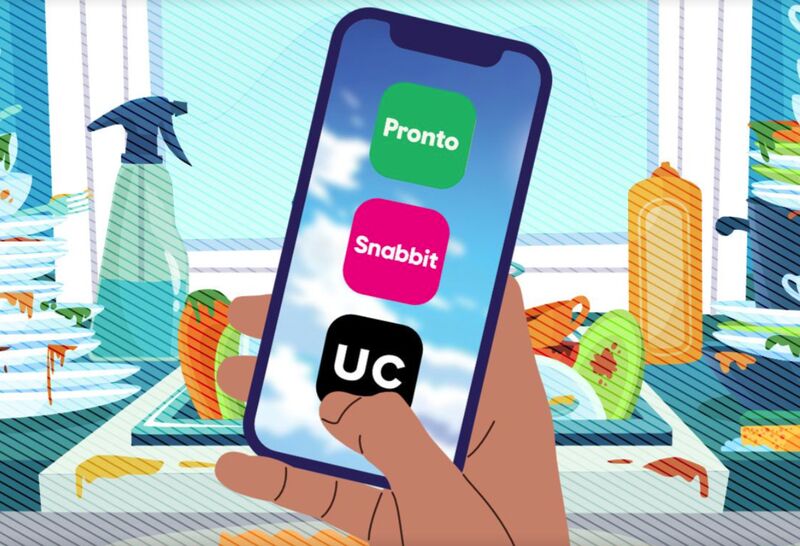
New Delhi, 27 April: Urban India is undergoing a massive shift in how it manages domestic chores. The “10-minute house help” model—providing on-demand assistance for cleaning, laundry, and kitchen prep—has officially surged past 10 million monthly active users (MAUs) as of March 2026.
This hyper-growth segment, once dominated by scheduled professional services, is now mirroring the trajectory of quick commerce (Blinkit, Zepto), transforming into a high-frequency daily utility for time-starved urban households.
Market Share and Performance (March 2026)
The sector reached a combined 10.4 million MAUs, with three major players leading the charge:
| Platform | Monthly Active Users | Growth & Booking Volume |
| Urban Company (InstaHelp) | 6.5 Million | Leads with ~60% market share; crossed 1M monthly bookings. |
| Pronto | 2.7 Million | Capturing 43% of new downloads; handling ~22,000 orders daily. |
| Snabbit | 1.2 Million | Hyper-local growth; nearing 1M monthly bookings. |
Why the Segment is Exploding
Instant Gratification: Mimicking food delivery, these apps deploy “Pros” (often an all-women workforce) within 10–15 minutes to handle urgent tasks like washing a sink full of dishes or cleaning up before guests arrive. Services are priced disruptively low, with some platforms offering an hour of help for as little as ₹100, or subscription bundles that reduce costs even further. For many, these apps have become the “Plan B” for when regular domestic help is on leave, providing a vetted, tech-enabled alternative to informal neighborhood networks.
The Funding Frenzy
Investors are pouring capital into the space to help these platforms scale their worker supply- Valued at approximately $200 million following recent funding discussions led by Lachy Groom. In talks to raise $60–70 million from Mirae Asset and SIG, targeting a valuation near $400 million.
Future Outlook: The Profitability Puzzle
While user adoption is skyrocketing, the “math” remains complex. Unlike groceries, which can be stored in dark stores, home services rely on a real-time gig workforce. Success depends on Offering benefits like health insurance and standardized pay to maintain a loyal supply. Improving unit economics by ensuring service providers can complete multiple jobs in a small radius.
