
Nifty FMCG Index Falls Nearly 2%; Dabur Slides 4% While ITC And Britannia Hit 52-Week Lows

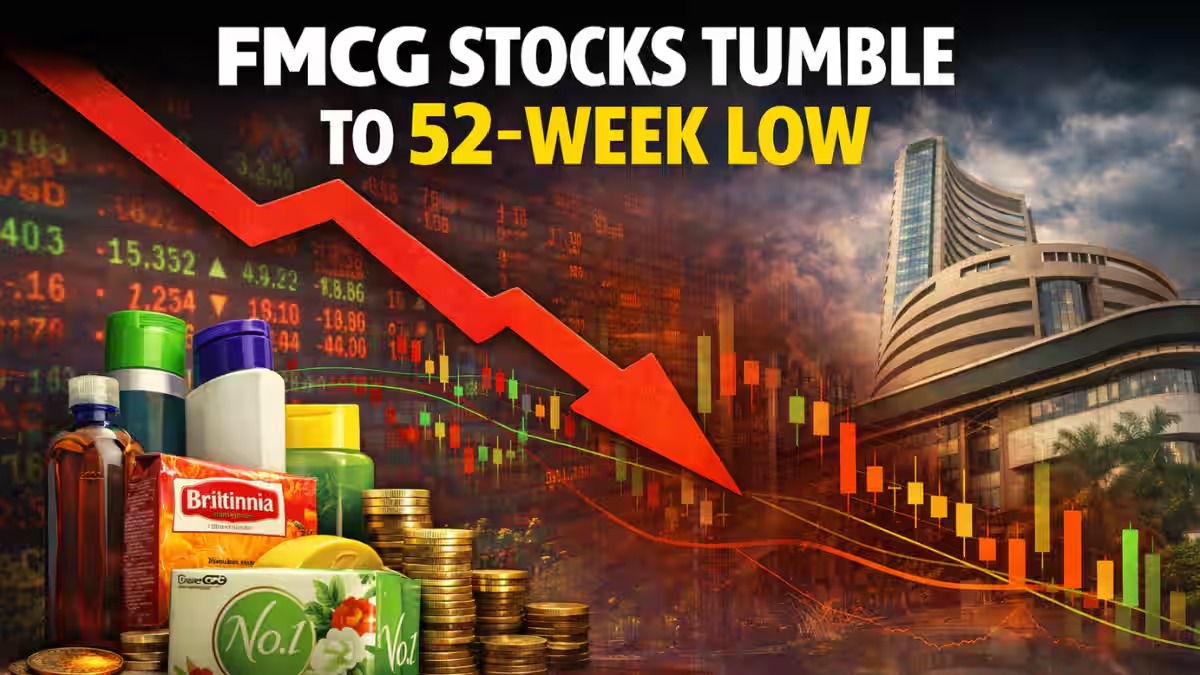
New Delhi, June 01: FMCG stocks remained under strong selling pressure on Monday, pulling the Nifty FMCG index down nearly 2 per cent during intra-day trading on the National Stock Exchange (NSE).
The sector continued to lag behind the broader market due to concerns surrounding rising inflation, weak monsoon forecasts, higher taxation, and pressure on profit margins.
At around 2:12 PM, the Nifty FMCG index was trading 1.8 per cent lower, compared to a 0.5 per cent decline in the benchmark Nifty 50 index. Over the past month, the FMCG index has dropped nearly 5 per cent, underperforming the broader market significantly.
Dabur India Shares Decline After USFDA Observations
Dabur India shares fell more than 4 per cent during Monday’s trading session after reports emerged regarding observations made by the US Food and Drug Administration (USFDA) at the company’s manufacturing facility in Dadra and Nagar Haveli.
According to reports, the USFDA inspection conducted in January 2026 identified concerns related to manufacturing standards, equipment maintenance, hygiene conditions, and alleged data integrity issues. Reports also mentioned concerns regarding contamination risks and the reliability of certain testing procedures at the facility.
The regulator reportedly issued a Form 483 notice, which is commonly released when inspection teams identify practices that may not fully comply with manufacturing standards.
The development negatively impacted investor sentiment and added further pressure on the stock.
ITC Hits Fresh 52-Week Low Amid Tax Concerns
Shares of ITC also came under pressure and touched a fresh 52-week low during intra-day trading. The stock has now corrected sharply from its previous highs recorded in 2025.
Market experts believe recent increases in taxation on cigarettes have affected investor confidence in the company. ITC had earlier highlighted that higher GST rates and excise duties imposed on cigarettes from February 2026 created a challenging environment for the legal cigarette business.
The company also noted that rising inflation, geopolitical tensions, and supply-chain disruptions are increasing operational costs across the sector. Despite these challenges, ITC stated that it continues to focus on strengthening its product portfolio and maintaining market share.
Other FMCG Stocks Also Witness Selling Pressure
Apart from Dabur and ITC, several other FMCG companies witnessed declines during the trading session. Stocks such as Hindustan Unilever, Tata Consumer Products, Colgate-Palmolive, Godrej Consumer Products, Britannia Industries, and United Breweries traded lower.
Britannia Industries and United Breweries also touched their respective 52-week lows during intra-day trade, reflecting the overall weakness across the consumer goods sector.
Weak Monsoon Forecast Adds To Market Worries
The recent revision in India’s southwest monsoon forecast has further increased concerns for FMCG companies. The India Meteorological Department (IMD) lowered its 2026 monsoon projection, indicating rainfall is expected to remain below normal this year.
A weaker monsoon can directly impact rural demand, which plays a major role in driving sales for FMCG companies across India. Lower rural spending often affects consumption growth, particularly in categories linked to daily essentials and household products.
At the same time, companies are also dealing with higher raw material prices, increasing freight costs, and intense market competition, all of which are expected to keep pressure on profit margins.
Analysts Expect Continued Margin Pressure
Market analysts believe FMCG companies could continue facing pressure on operating margins during the first half of FY27 due to elevated inflation and rising costs.
Brokerage firms have indicated that while companies may attempt selective price hikes, most brands remain cautious about aggressively increasing prices as they continue to prioritise volume growth and market share.
Experts, however, remain relatively optimistic about companies with strong pricing power, efficient distribution networks, and the ability to maintain growth despite challenging market conditions.
While urban demand remains comparatively stable, uncertainty around rural consumption and rising operational expenses may continue to weigh on the FMCG sector in the near term.
