
Job creation should be done by small companies: Nandan Nilekeni

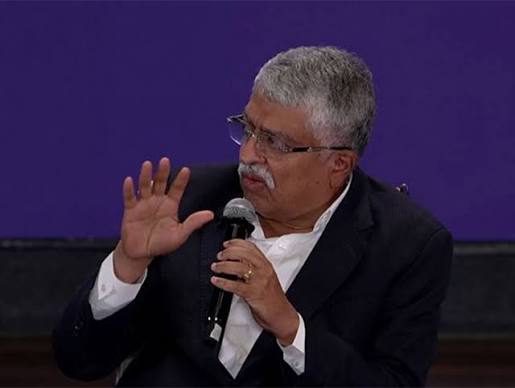
Mumbai, Sept 10: “You should create a situation where job creation is done by millions of small companies,” Nandan Nilekani, co-founder of Infosys and former chairman of the Unique Identification Authority of India (UIDAI) said here today.
“If you want to create an economy that’s lively and is generating jobs, it’s not necessarily done by having a few big companies, it is going to come from having millions of small companies,” he said while delivering his keynote address at the Global Fintech Fest (GFF) 2026.
Pointing out that one of the “legitimate concerns” about AI is what happens to jobs,
Nilekani said, “We have to think of an economy with millions of small businesses and make
them AI proof.”
He added that “Tokenisation by itself will only handle issuance, but when it operates on public chains and is supported by agentic transactions, it can create the volumes and liquidity needed to build an open, interoperable financial network accessible to the mass population.”
He said, “Tokenisation alone is not enough; agentic AI can drive demand. Tokenisation creates trusted and portable assets, while agentic AI can generate the demand and transaction activity needed to make those assets useful.”
He showcased three live pilots running on one common architecture: tokenised dairy assets,
where a cow’s identity and health data can unlock credit; tokenised warehouse receipts, letting
stored grain be pledged for a loan; and a marketplace for securitising assets.
“What is important is that all three use cases run on the same underlying architecture,” he said, adding that it is public-chain agnostic, built for high volumes and designed with quantum safety and cybersecurity in mind.
“It doesn’t matter which public chain you use, as long as it can support the scale and accessibility needed for the Finternet. This is where the Finternet moves beyond tokenisation alone. Tokenised assets provide the trusted, portable units of value. At the same time, agentic AI helps those assets find markets and transact across them,” Nilekani said.
He highlighted the financial interoperability and liquidity needed for a financial internet in which value can move as seamlessly as information. (BVI)
