
World on edge as fighting restarts in West Asia; oil, gas supplies may be hit

New Delhi, July 8: Countries around the world are again on the edge as fighting resumed between Iran and the US, with President Donald trump today declaring that interim peace deal was ‘over’
Tensions re-ignited after a lull of about a month as the US carried out massive air strikes on Iran, which reportedly attacked some vessels in the Strait of Hormuz last night.
Iran retaliated by targeting US military bases in Bahrain and Kuwait, leading to apprehensions about a fresh turmoil in the region on which many countries around the world depend for oil and gas.
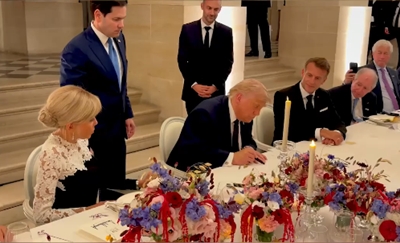
“They are scums.. they are sick people, led by sick people,” Trump told journalists about Iran in response to questions in Ankara in Turkey on the sidelines of NATO Summit.
Trump said Iran had fired missiles at ships instead of focusing on funeral ceremonies for its slain leader Ayatollah Khamenei and said the US response was “20 times tougher.”
His remarks pushed Brent crude oil up by 6 percent to $78 per barrel, ending the lowering trend of the costs witnessed over the last few weeks due to easing of tensions between the US and Iran.
This is likely to have spiral impact on countries across the world, including India, since West Asian region is the source of a major share of petroleum products.
It is apprehended that the escalation would again cause choking of the Strait of Hormuz, the maritime route for a majority of oil and gas supplies worldwide.
Renewed Fighting
US military last night carried out large scale attacks on Iran, targeting its military and petroleum assets.
According to US Central Command (CETCOM), it hit “over 80 targets” in Iran in direct response to attacks on three commercial vessels transiting the Strait of Hormuz: the Marshall Islands-flagged M/T Al Rekayyat, the Saudi-flagged M/T Wedyan and the Liberian-flagged M/T Cyprus Prosperity, all reportedly sailing near Oman’s coastline at the time.
Iran has instructed international shipping to use a designated “safe route” that hugs its own coastline through the strait, marking a stretch of Omani waters as a “restricted zone”.
Local broadcasters said the tankers had disregarded warnings from Iranian forces to alter course.
CENTCOM said in a statement that “US forces struck Iranian air defence systems, command and control networks, coastal radar sites, anti-ship missile capabilities, and more than 60 Islamic Revolutionary Guard Corps small boats in and near the strait to degrade Iran’s ability to continue attacking international commerce flowing through the international trade corridor.”
The command also cautioned that further strikes could follow should Iran continue acting “outside of agreements”.
Iranian media reported explosions in the southern port of Sirik and Qeshm Island, a strategically significant point in the Strait of Hormuz, and near Bandar Abbas, a port previously blockaded by the US Navy before the MoU took effect.
One base was hit in Dashti county and another near the town of Chogadak. Fars reported no deaths or injuries from either incident.
How Iran Retaliated
Iran’s Islamic Revolutionary Guard Corps (IRGC) said it had struck 85 US military targets across Bahrain and Kuwait, with air raid sirens sounding in both countries.
The IRGC said it “destroyed 85 major US military installations in Port Salman, [the US] Fifth Naval Base in Bahrain, and Kuwait’s Ali Salem Airbase, and shot down an enemy MQ9 drone that attempted to interfere in the operation.”
One IRGC member was reportedly killed in the exchange.
Iran’s Ministry of Foreign Affairs condemned what it called “aggressive attacks and gross violation” of the MoU, stating that “the terrorist US military, in clear violation of Article 2, Paragraph 4 of the United Nations Charter, committed military aggression against several monitoring and surveillance centres on the southern coasts of Iran.”
The ministry added that the strikes “constitute a flagrant violation of Paragraph 1 of the Memorandum of Understanding on the Termination of War, which mandates the cessation of military operations.”
It further warned that Iran’s armed forces “will not hesitate in defending Iran’s territorial integrity, national sovereignty, and national security against US military aggression in accordance with Article 51 of the UN Charter, and will target the source and origin of the aggression.”
Parliament Speaker and lead negotiator Mohammad Ghalibaf wrote on X that the strikes, the reimposed sanctions and ongoing Israeli attacks on Lebanon together amounted to “major MoU violations by the US”.
He added that “The era of bullying and extortion is over. It leads nowhere. We don’t fold.”
Iranian Foreign Minister Abbas Araghchi said in a Telegram statement that the US strikes had “rendered key, fundamental elements of the war-ending agreement ineffective”.
He said, “the US regime, having reneged on its commitments, bears responsibility for the dangerous consequences of this escalation.”
Fate of US-Iran Peace Talks?
The US and Iran had signed an interim peace 60-day deal on June 19, which led to negotiations and halted fighting across the region including in Lebanon.
The agreement had required Iran to restore commercial shipping through the Strait of Hormuz to pre-war levels in exchange for a US sanctions waiver and the unfreezing of Iranian assets, while both sides worked toward a resolution on Iran’s nuclear programme.
Trump’s comment that the deal was effectively “over”, indicates that the fate of the negotiations is uncertain.
Today’s escalation marks the third occasion on which the US has launched major strikes on Iran while talks were still under way, a pattern Tehran says has steadily eroded trust between the two sides. (BVI)
