

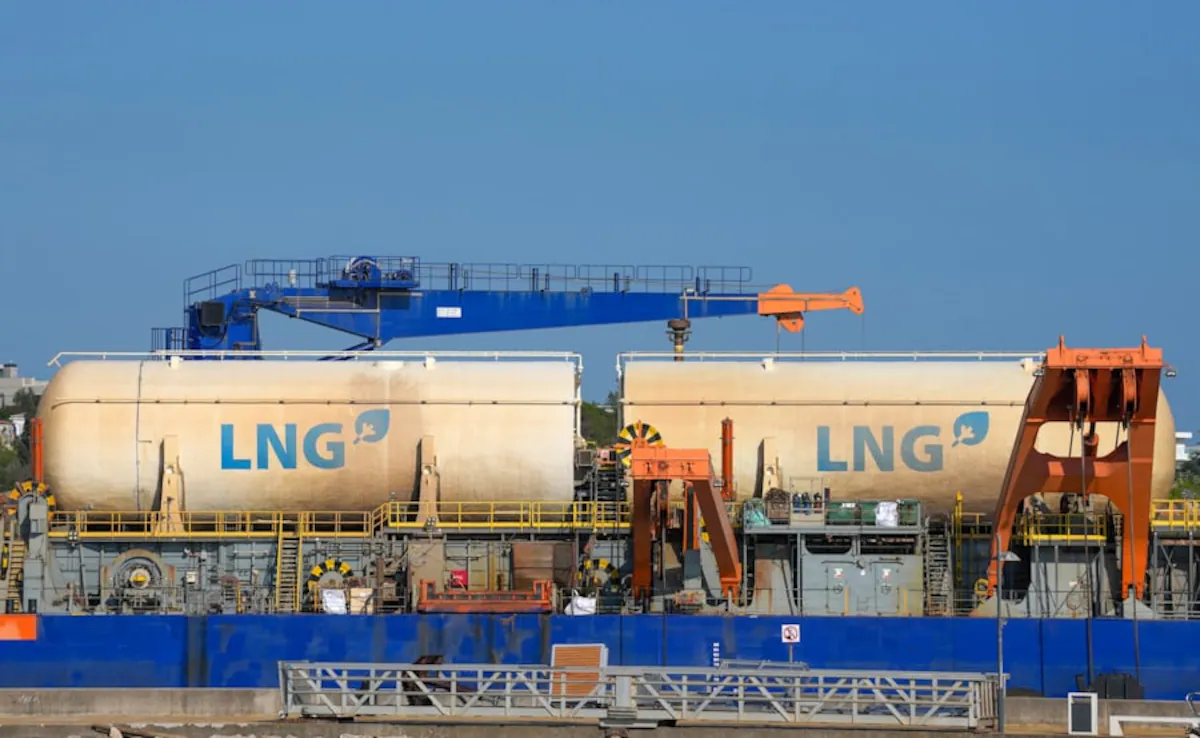
New Delhi, July 5: The Government of India has withdrawn most provisions of the emergency natural gas supply regulations imposed in March during the West Asia conflict as Liquefied Natural Gas (LNG) cargo movement has resumed through the Strait of Hormuz following a ceasefire agreement between Iran and United States.
In a notification, the Ministry of Petroleum and Natural Gas amended the Natural Gas (Supply Regulation) Order, 2026, removing key operational provisions that had enabled the government to prioritise the allocation of domestically produced natural gas and imported LNG to essential consumers.
Earlier, on March 9, the government had issued an order under the Essential Commodities Act imposing regulations on natural gas supplies after the conflict in West Asia disrupted LNG shipments through the Strait of Hormuz.
During the crisis, several suppliers invoked force majeure clauses and redirected cargoes, prompting the government to step in to secure supplies for priority sectors.
According to the ministry, the situation has stabilised following the ceasefire, ongoing diplomatic negotiations and the restoration of maritime traffic through the strategically important Strait of Hormuz.
“The ongoing conflict in the Middle East that had resulted in the disruption of liquefied natural gas shipments through the Strait of Hormuz has been subject to a ceasefire, and negotiations are ongoing, as part of which, sea traffic through the Strait of Hormuz has been permitted to be resumed,” the notification said.
The gas supply restrictions formed one of three emergency measures announced after energy supplies from the Gulf came under threat due to the effective closure of the Strait of Hormuz following US and Israeli strikes on Iran on February 28 and Tehran’s retaliatory response.
The other two emergency measures — requiring refiners to maximise LPG production by diverting feedstock from petrochemical units and restricting diesel sales to bulk consumers— have already been withdrawn after fuel supplies returned to normal.
India is the world’s third-largest importer and consumer of crude oil and relies on imports for nearly 88 per cent of its crude oil demand and about half of its natural gas consumption.
Around 40-45 per cent of India’s crude oil imports and nearly 65 per cent of its LNG supplies originate from West Asia, highlighting the country’s dependence on uninterrupted shipping through the Strait of Hormuz, a key transit route for Gulf energy exports.
March Emergency Order: Sector-Wise Gas Allocation Rules
The March order authorised the government to determine sector-wise allocation and diversion of domestic gas, LNG and regasified LNG to maintain supplies for priority consumers affected by the West Asia crisis.
Under the emergency framework, piped natural gas (PNG) households, compressed natural gas (CNG) used in transportation, LPG production facilities and pipeline operations were guaranteed 100 per cent of their average gas consumption over the previous six months.
Fertiliser manufacturers were assured 70 per cent of their average gas requirement, while industrial consumers connected to the national gas grid and city gas distribution networks were guaranteed 80 per cent of their average usage, subject to operational availability.
To meet these commitments, the government had permitted cuts in gas supplies to petrochemical units and power plants while instructing oil refiners to reduce gas consumption to nearly 65 per cent of their average usage wherever operationally feasible. (BVI)
