

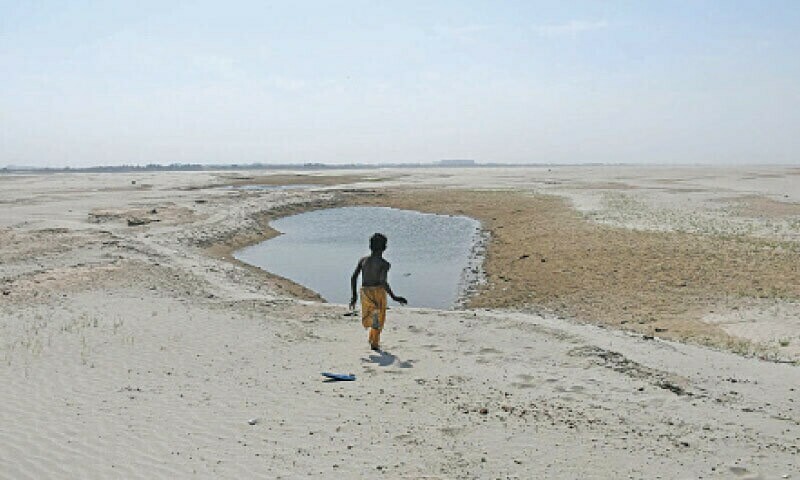
New Delhi, June 13: Amidst intense heat, one-third of population in Sindh and Balochistan under Pakistan’s administration is faced with severe water crisis, largely because of Punjab’s irresponsible behaviour.
People of Sindh and Balochistan have been demanding liberation from Pakistan and denial of resources is one of the tools of retribution used by Islamabad against them.
Officials of Sindh allege that upstream Punjab is illegally drawing 53,394 cusecs of water from Sukkur Barrage, a critical lifeline, against its sanctioned allocation of 44,000 cusecs — an excess of over 21%.
According to data from Sindh’s irrigation department, the North West Canal faces a 64.1% deficit, while the Rice Canal and Dadu Canal report shortfalls of 38% and 82%, respectively.
Similarly, Punjab is reportedly drawing 25,694 cusecs of water from Taunsa Barrage against its 24,000 cusecs limit.
The acute shortage has triggered a fierce political blame game.
Jamaat-e-Islami chief Hafiz Naeem ur Rehman has accused the Pakistan Peoples Party (PPP)-led Sindh government of failing to manage chronic water disruptions in its capital Karachi, which currently affect nearly 70 percent of the city.
In response, the PPP redirected its criticism toward federal water managers and upstream diversions.
PPP Sindh president Nisar Ahmed Khuhro warned of devastating economic consequences for the region, noting that the province produces approximately 5.5 million tonnes of rice annually, bringing in $1.4 billion in export revenue.
Highlighting the gravity of the cuts during the crucial Kharif planting season, Khuhro stated, “Sindh produces 67 per cent of the country’s agricultural output, yet it is being deprived of its rightful water share.”
Balochistan, where the demand for freedom is much more amplified than in Sindh, is also facing acute water shortages and people there are compelled to drink dirty water. (BVI)
