
PM Modi inaugurates Kartavya Bhawan — new office complex of various ministries

Arun Kumar Das
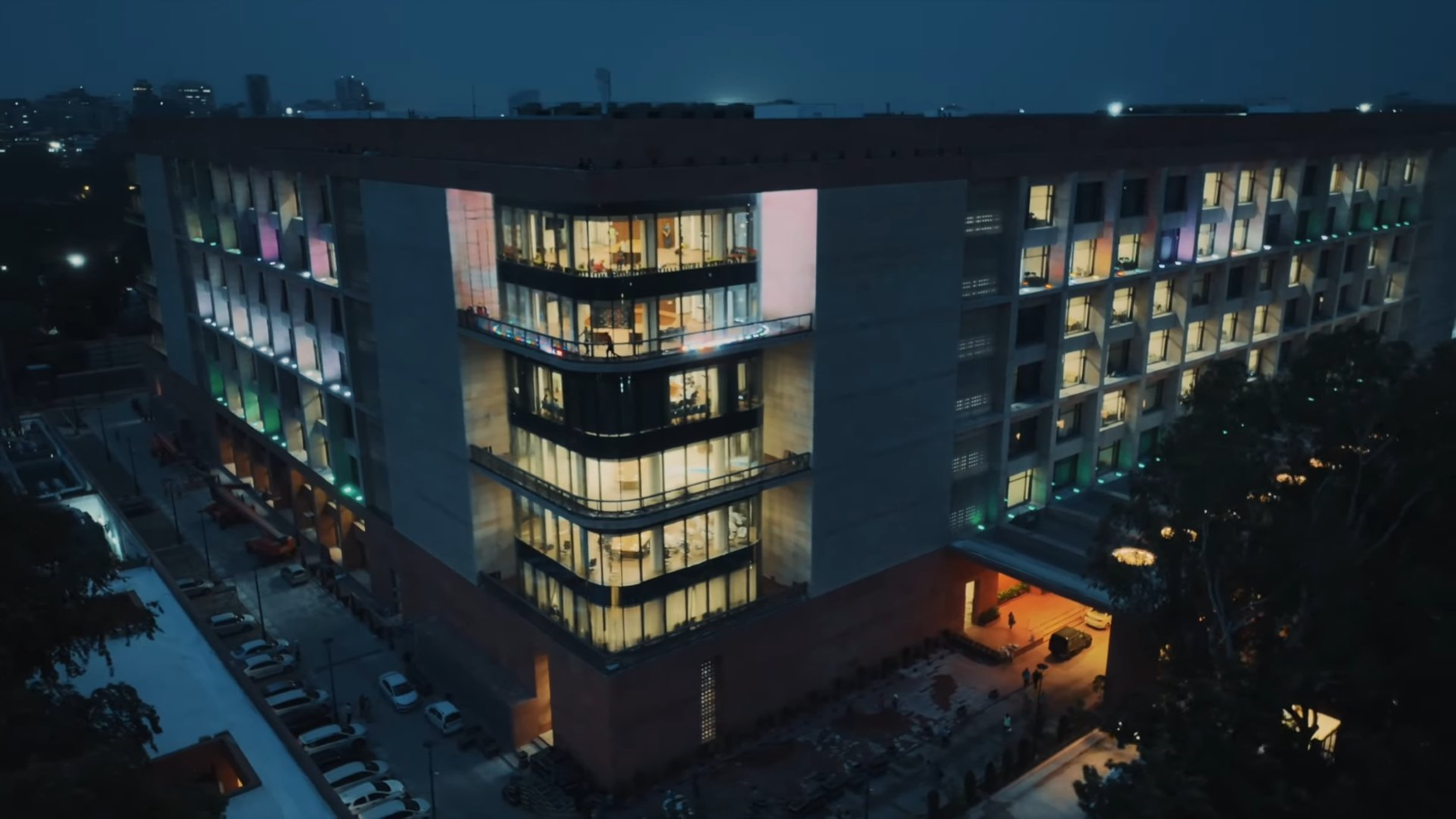
New Delhi, Aug 6 (BVI): Kartavya Bhawan-03, the first among several Common Central Secretariat buildings being constructed with the aim of streamlining administrative processes, was inaugurated here today by Prime Minister Narendra Modi.
The multi-floor building complex will house offices of several ministries, including Home Affairs, External Affairs, Rural Development, Micro, Small and Medium Enterprises (MSME), Department of Personnel & Training (DoPT) and Petroleum & Natural Gas.
It is part of the Central Vista being built alongside the Kartavya Path (erstwhile Rajpath) with the objective of streamlining administrative processes, enhance inter-ministerial coordination, and accelerate policy execution for better public service delivery.
The project embodies the government’s broader administrative reform agenda, according to the government.
By co-locating Ministries and adopting cutting-edge infrastructure, the Common Central Secretariat will improve inter-ministerial coordination, accelerate policy execution, and foster a responsive administrative ecosystem, the government says.
Equipped with over 1000 CCTV cameras and manned by about 150 trained staff under modern building management plan, Kartavya Bhavan 03 spans over 1.5 lakh square meters across two basements and seven levels.
It is a state-of-the-art, sustainable government complex.
Under the Central Vista project, there will be a total of 10 such buildings out of which two more are also nearing completion.
Also known as Common Central Secretariat (CCS) building, it has been built as a part of a complex of three buildings at the site of the erstwhile Indira Gandhi National Centre for the Arts on Janpath.
Currently, key ministries operate from aging structures like Shastri Bhawan, Krishi Bhawan, Udyog Bhawan, and Nirman Bhawan, built in the 1950s to 1970s. These outdated buildings have high maintenance costs and limited capacity for modern governance needs. The new infrastructure is expected to boost productivity, reduce costs, and improve employee well-being.
The facility features IT-ready workspaces, ID-based access control, integrated electronic surveillance, and a centralized command system for security. Designed to meet a Green Rating for Integrated Habitat Assessment-4 (GRIHA-4) sustainability rating, the building incorporates double-glazed façades, rooftop solar panels, solar water heating, rainwater harvesting, and advanced heating, ventilation, and air conditioning (HVAC) systems.
As a zero-discharge campus, it will treat and reuse wastewater, manage solid waste in-house, and provide e-vehicle charging stations. The building utilizes recycled construction and demolition waste, lightweight partitions, and energy-saving systems to minimize environmental impact.
Special glass windows will reduce heat and noise, while LED lighting with motion sensors, smart lifts, and an advanced energy management system will optimize power usage. Solar panels on the roof will generate over 5.34 lakh units of electricity annually, and solar water heaters will meet more than a quarter of the daily hot water requirement.
It is learnt that the Ministry of Home Affairs has already moved into the building. The Ministries of Rural Development, External Affairs, Personnel, Petroleum and Natural Gas and Micro, Small and Medium Enterprises are also shifting in.
These ministries were earlier located in Krishi Bhawan, North Block, South Block, Udyog Bhawan and Shastri Bhawan. The office of the Principal Scientific Advisor will also move into the building.
In a statement on Monday, the Prime Minister’s Office said the building was “designed to foster efficiency, innovation, and collaboration by bringing together various Ministries and Departments currently scattered across Delhi.”
Solar panels on the roof of Kartavya Bhavan 3 will generate over 5.34 lakh units of electricity every year. Solar water heaters meet more than a quarter of the daily hot water need. Charging stations for electric vehicles are also provided.
As a part of the Central Vista redevelopment plan proposed by the Housing and Urban Affairs Ministry in 2019, North Block and South Block are set to be converted into the national museum, while the other office buildings are expected to be demolished to make way for new CCS buildings.
In a reply in the Lok Sabha on July 24, Housing and Urban Affairs Minister of State Tokhan Sahu had said that the Common Central Secretariat (CCS) 1, 2 and 3 complex was 88 per cent complete and expected to be completed by September this year.
In all, the plan included 10 CCS buildings to be constructed along both sides of Kartavya Path, which stretches from India Gate to Rashtrapati Bhawan. As of now, work on CCS 10 (at the site of Raksha Bhawan) and CCS 6 and 7 (at the site of the old Vice-President’s house and Vigyan Bhawan Annexe on Maulana Azad Road) is ongoing. The projects for the remaining buildings are yet to be started.
Work on the CCS 1,2 and 3 buildings had started in 2021, after Larsen & Toubro won the contract with a bid of Rs 3,141.99 crore.
As a part of the Central Vista masterplan, the government completed the redevelopment of Rajpath and renamed it Kartavya Path in 2022, followed by the completion of the new Parliament building in 2023.
The Vice-President’s Enclave was also built as per the plan. Work on a new residence and office for the Prime Minister is ongoing. (BVI)
