
UP to have ‘No PUCC, No Fuel’ scheme in NCR region from October 1
UP Govt aims to cut air pollution in the NCR by 30-35 percent this year

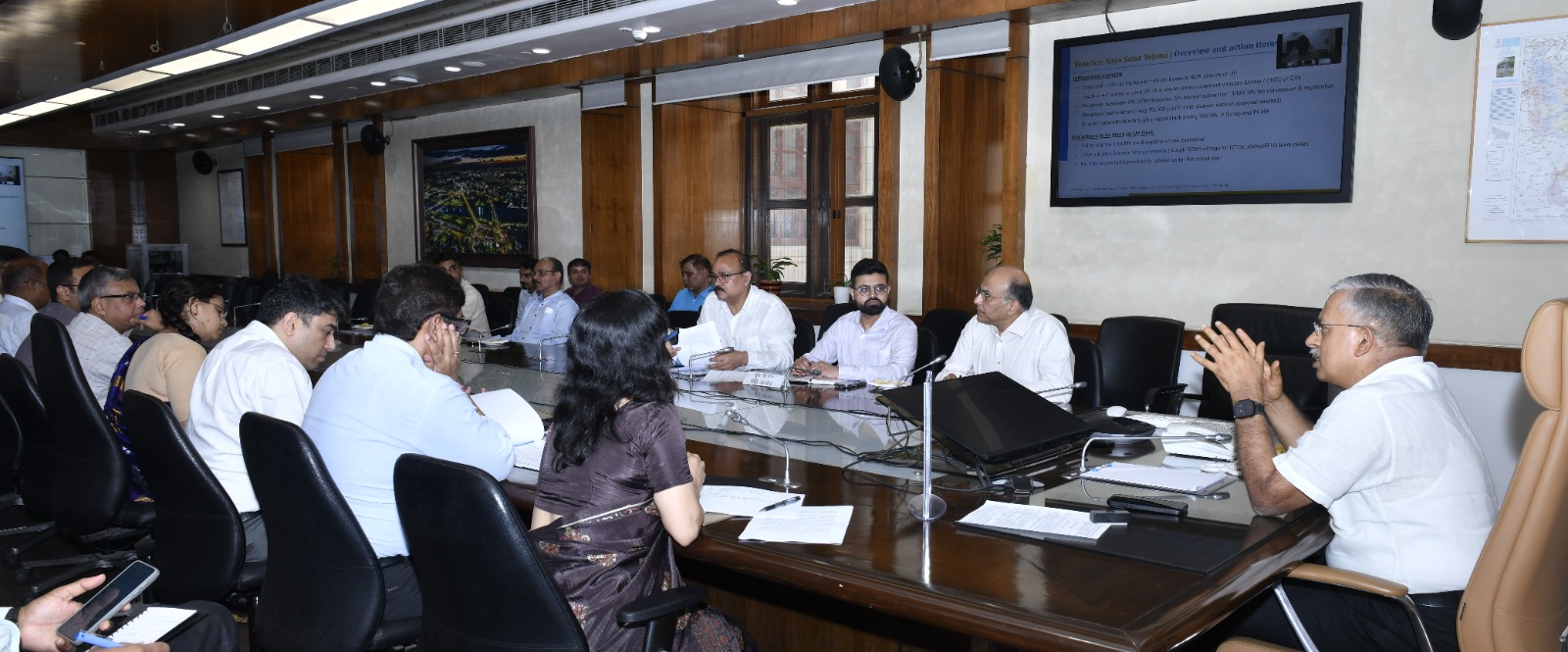
Lucknow, June 3: The Uttar Pradesh Government aims to reduce air pollution levels in the National Capital Region (NCR), which includes Ghaziabad, Meerut and Noida districts bordering Delhi, by 30 to 35 percent by the current calendar year and as part of this endeavour it will implement a “No PUCC, No Fuel” system from October 1, 2026.
These decisions, among several others, were taken at a meeting chaired by Chief Secretary S.P. Goyal regarding air pollution control and air quality improvement in NCR.
The meeting included a detailed review of the work being done by various departments to control pollution and the upcoming action plan.
In his address, the Chief Secretary urged all concerned departments to ensure coordinated and effective action to control air pollution and significantly improve air quality in the Delhi-NCR region. He urged citizens to be aware of this to ensure their participation.
The Chief Secretary informed that the State Government aims to reduce air pollution levels in the NCR region by 30 to 35 percent by the year 2026, an official spokesman said.
To achieve this objective, targeted interventions are being made in key areas such as vehicular pollution, industrial emissions, road dust, construction and demolition waste (C&D waste), green cover expansion and stubble management.
He directed that an integrated network of various portals, mobile applications, GPS tracking systems, and dashboards be developed in the future to digitally monitor all key activities.
This will enable real-time monitoring of road cleaning, road redevelopment, greening, construction waste management, and other pollution control measures.
He directed all departments to ensure timely achievement of set targets and maintain quality of work through regular reviews.
The meeting was informed that in the automobile sector, through the ‘Naya Safar’ scheme, old and polluting vehicles are being phased out and BS-6, CNG and electric vehicles are being promoted.
Approximately 26.19 lakh ‘end-of-life’ (EOL) vehicles have been identified in the NCR districts and between January and April 2026, 37,156 vehicles were scrapped and 460 vehicles were seized.
Additionally, a “No PUCC, No Fuel” system will be implemented from October 1, 2026, under which ANPR cameras will be installed at 1,041 petrol pumps in the NCR.
PUCC or Pollution Under Control Certificate is issued to vehicles whose emission levels are within the allowed range and not polluting.
To make public transport clean and environmentally friendly, a target has been set to operate a total of 975 electric buses in Ghaziabad, Noida, Greater Noida, and Meerut. Currently, 100 e-buses operate in these cities.
To strengthen air quality monitoring, 43 Continuous Ambient Air Quality Monitoring Stations (CAAQMS) are to be installed in the NCR-Uttar Pradesh region.
Of these, 25 stations are operational, while the remaining 18 new stations will be installed by October 2026.
Under industrial pollution control, 725 air polluting industries have been identified. Of these, Online Continuous Emission Monitoring System (OCEMS) has been installed in 613 industries and connected to the server of the Central Pollution Control Board (CPCB).
The need for Air Pollution Control Devices (APCDs) has been identified in 665 industries, of which this system has been installed in 179 units, and installation and retrofitting is underway in 100 units, and installation is being done in other units in a phased manner.
To control road dust, a target has been set to redevelop a total of 1,792 kilometers of roads in Ghaziabad, Noida, Greater Noida, and Meerut, with an estimated expenditure of approximately ₹3,666 crore. To date, 143.8 kilometers of road redevelopment work has been completed.
To further enhance the effectiveness of the mechanical road cleaning system, a requirement for 108 mechanized road sweeping machines has been estimated. Currently, 45 machines are available, and the procurement process for 50 more is underway.
A total of 37 secondary collection centers are to be established under Construction and Demolition Waste (C&D Waste) Management, of which 29 centers are operational, and the remaining centers are under construction.
A system based on GPS tracking, geo-tagging, and an Integrated Command and Control Center (ICCC) is being developed to monitor all construction sites.
Under Municipal Solid Waste (MSW) management, systems for scientific collection and processing of daily waste are being strengthened in Noida, Greater Noida, Ghaziabad, and Meerut.
A 600 TPD torrefied charcoal project and a 300 TPD biogas project are being developed in Noida. Effective monitoring of biomass and garbage burning incidents is also being ensured.
Apart from this, plantation, stubble management, establishment of CBG plants, biomass utilization, EV charging stations, battery swapping stations, metro and RRTS expansion, last mile connectivity and public awareness programs have also been made important parts of the action plan.
