
QUAD meeting: India, US, Japan, Australia announce energy security initiative

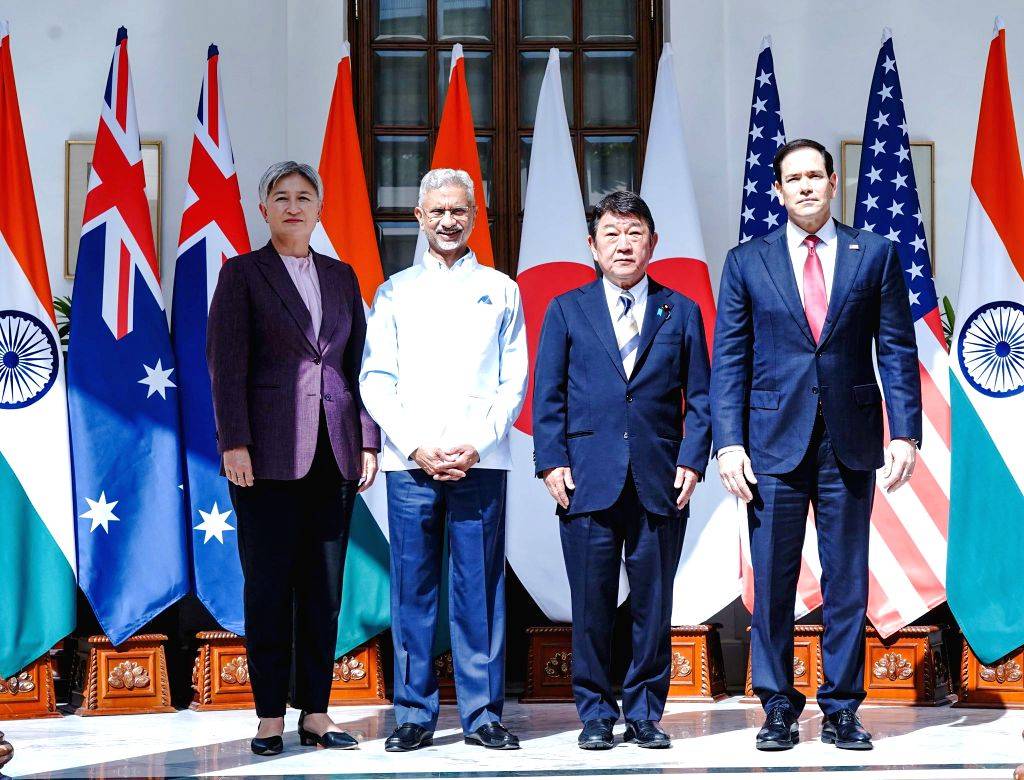
New Delhi, May 26: Amidst disruptions in global energy supplies, India, US, Japan and Australia, under the framework of the QUAD grouping, today announced a new Indo-Pacific energy security initiative to improve regional resilience in fuel supply chains.
The framework will focus on technology partnerships, policy coordination, market intelligence and emergency preparedness exercises.
The initiative is expected to be developed further through a dedicated statement and a fuel security forum to be hosted later this year by the US Department of Energy.
This was one of the initiatives announced by the Foreign Ministers of the four countries after their meeting under the framework of QUAD here, aimed at strengthening strategic coordination across the Indo-Pacific, with a sharper focus on maritime security, energy resilience, critical minerals and infrastructure cooperation.
They signalled their joint intent to push the UAD beyond dialogue and towards coordinated action on shared priorities.
Australia highlighted that recent disruptions to global energy routes have reinforced the importance of coordinated regional responses, particularly amid concerns around chokepoints such as the Strait of Hormuz and their implications for energy access, economic stability and supply continuity.
The United States announced a new Indo-Pacific Maritime Surveillance Cooperation initiative designed to integrate surveillance capabilities across Quad countries and improve real-time information sharing in the region.
The initiative seeks to enhance visibility across critical maritime trade routes that are essential for global commerce.
As part of this push, the Quad expanded the Indo-Pacific Maritime Domain Awareness initiative to enable near real-time commercial maritime tracking for countries across the region.
The move is intended to strengthen maritime monitoring and improve regional coordination amid growing concerns around shipping security.
The US underscored the economic significance of maritime security, noting that nearly 60 per cent of global maritime trade passes through the Indo-Pacific, making secure sea routes a matter of strategic importance not only for Quad countries but for economies worldwide.
Port Infrastructure Cooperation
The Quad foreign ministers also launched a new “Ports of the Future” partnership to strengthen port infrastructure cooperation across the Indo-Pacific. The initiative is expected to improve maritime connectivity and deepen infrastructure collaboration in the region.
Australia said the partnership reflects a stronger Quad commitment to the Pacific region, with an initial pilot project on port infrastructure planned in Fiji. The initiative marks the first instance of Quad members jointly working on a port development project and is expected to expand regional infrastructure resilience.
India will also host the next Quad-at-Sea Mission, bringing together coast guards from all four countries to strengthen maritime cooperation and operational coordination.
Critical Minerals and Supply Chains
Quad members raised concerns over vulnerabilities in global supply chains, particularly around critical minerals that are increasingly essential for advanced manufacturing, defence technologies and energy transition sectors.
Japan stressed the need for stronger cooperation on economic security, with members discussing ways to strengthen regional resilience against export restrictions and supply disruptions.
In a parallel development, India and the United States signed an agreement to cooperate on critical minerals and rare earths, marking a step towards strengthening supply chain resilience in strategically important sectors.
Maritime Security and Indo-Pacific Stability
The Quad reaffirmed its commitment to a free, open and rules-based Indo-Pacific, with emphasis on maritime security, safe navigation and adherence to international law.
India said the Quad continues to serve as an important platform for exchanging strategic perspectives among maritime democracies located across the Indo-Pacific. Cooperation across maritime surveillance, logistics, undersea cables, capacity building and humanitarian assistance is also expanding steadily.
The grouping further reiterated the importance of ensuring safe and uninterrupted maritime commerce while stressing adherence to international legal frameworks governing sea lanes and navigation.
