
Inside India–New Zealand Free Trade Agreement: Cheaper Fruit, Smoother Visas
The Free Trade Agreement (FTA) was signed in Delhi on Monday

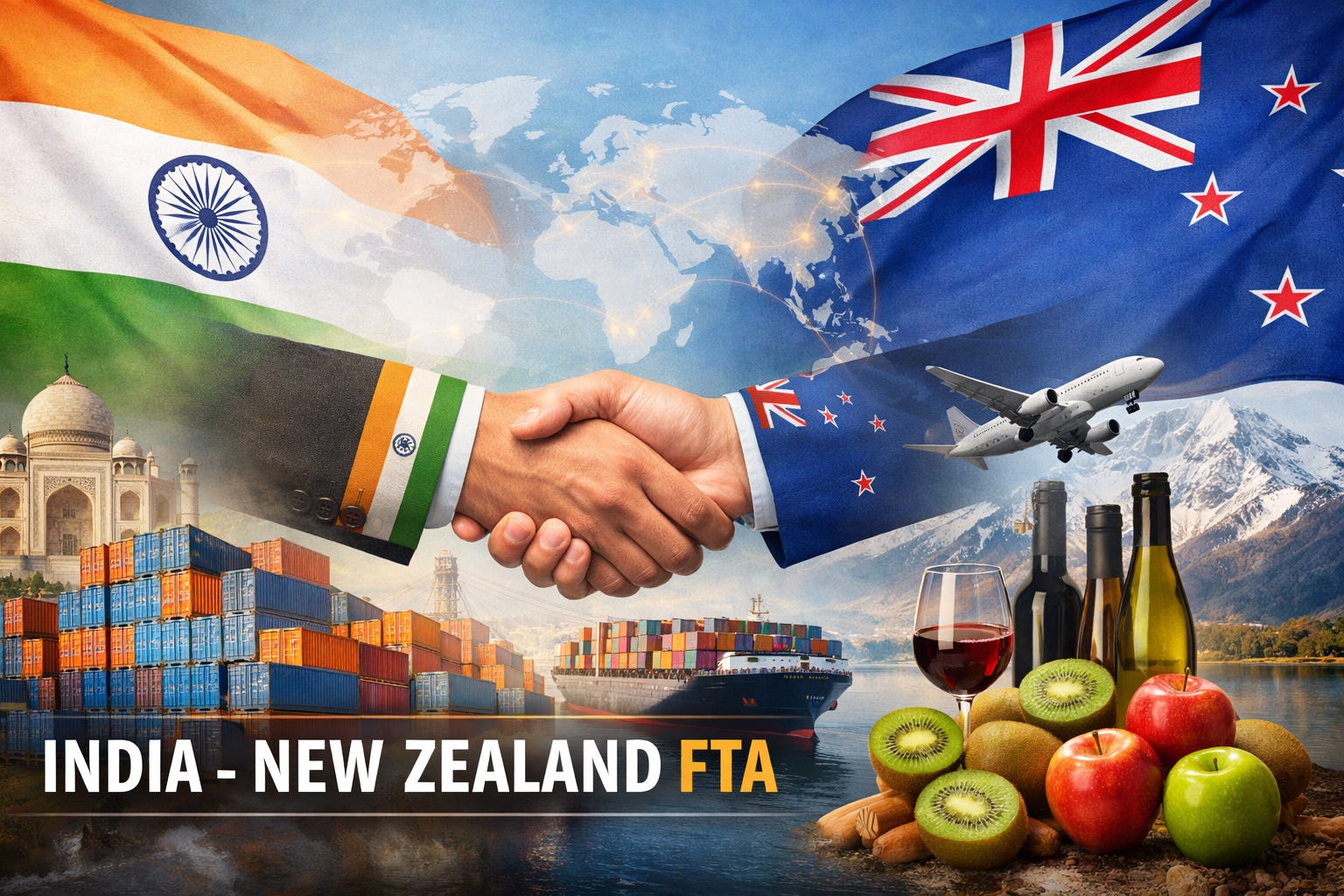
New Delhi, April 27: India and New Zealand are moving closer to finalizing a free trade agreement (FTA) that promises to make imported goods like fruits, dairy, and wine more affordable for Indian consumers, while also easing visa norms for students and professionals.
The agreement, recently signed by India’s Commerce Minister Piyush Goyal and New Zealand Trade Minister Todd McClay, is awaiting approval from New Zealand’s Parliament. It is widely expected to pass with bipartisan backing.
Lower Prices for Consumers
One of the most immediate impacts of the deal will likely be felt in everyday shopping. Popular imports such as apples and kiwis from New Zealand, which currently carry premium prices, are expected to become more affordable as tariffs are gradually reduced. Wine imports will also see price drops, though these reductions will be phased in over a 10-year period.
Boost for Industry and Manufacturing
India stands to benefit from duty-free access to key industrial inputs, including wooden logs, coking coal, and metal scrap. This could help lower production costs and support infrastructure development.
On the other hand, New Zealand will gain improved access to India’s vast market for its dairy exports. Certain food ingredients meant for re-export will receive immediate duty-free entry, while tariffs on products like infant formula and high-value dairy items will be reduced over a seven-year timeline.
Also read: India, New Zealand sign Free Trade Agreement
Strengthening Trade and Economic Ties
New Zealand Prime Minister Christopher Luxon described the agreement as a “historic milestone,” emphasizing its role in opening access to one of the world’s fastest-growing markets. He also highlighted the potential for increased trade, investment, and job creation, aligning with New Zealand’s goal to double exports in the coming decade.
Opportunities for Indian Exporters And Students
Indian industries are also expected to gain significantly. Sectors such as textiles, leather, pharmaceuticals, engineering goods, and automobiles will benefit from improved market access in New Zealand.
In addition to trade, the agreement is expected to ease visa processes, making it simpler for students, professionals, and workers to move between the two countries—further strengthening people-to-people ties.
