
Budget 2026: Key highlights of proposals made regarding various sectors

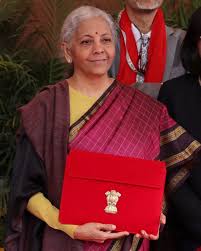
New Delhi, Feb 1 (BVI) Here are some key highlights of the Budget 2026 presented by Finance Minister Nirmala Sitharaman in Parliament today:
First Kartavya is to accelerate and sustain economic growth and proposes 6 interventions
1. Scaling up manufacturing in 7 strategic and frontier sectors
- Biopharma SHAKTI (Strategy for Healthcare Advancement through Knowledge, Technology and Innovation) announced, with an outlay of ₹ 10,000 crores over the next 5 years to develop India as a global Biopharma manufacturing hub.
- A Biopharma-focused network to be created with 3 new National Institutes of Pharmaceutical Education and Research (NIPER) and upgrading 7 existing ones.
- A network of over 1000 accredited India Clinical Trials sites to be created
- India Semiconductor Mission (ISM) 2.0 to be launched to produce equipment and materials, design full-stack Indian IP, and fortify supply chains with focus on industry led research and training centres to develop technology and skilled workforce.
- The Electronics Components Manufacturing Scheme outlay increased to ₹40,000 crore.
- Dedicated Rare Earth Corridors to be established, to support the mineral-rich States of Odisha, Kerala, Andhra Pradesh and Tamil Nadu to promote mining, processing, research and manufacturing.
- Government to launch a Scheme to support States in establishing 3 dedicated Chemical Parks, through challenge route, on a cluster-based plug-and-play model.
- Strengthening Capital Goods Capability
- Hi-Tech Tool Rooms to be established by CPSEs at 2 locations as digitally enabled automated service bureaus that locally design, test, and manufacture high-precision components at scale and at lower cost.
- A Scheme for Enhancement of Construction and Infrastructure Equipment (CIE) to be introduced, to strengthen domestic manufacturing of high-value and technologically-advanced CIE.
- A Scheme for Container Manufacturing announced, to create a globally competitive container manufacturing ecosystem, with a budgetary allocation of over ₹10,000 crore over a 5 year period.
- Integrated Programme for the Textile Sector announced
- The National Fibre Scheme for self-reliance in natural fibres such as silk, wool and jute, man-made fibres, and new-age fibres.
- Textile Expansion and Employment Scheme to modernize traditional clusters with capital support for machinery, technology upgradation and common testing and certification centres.
- Mega Textile Parks to be setup in challenge mode with focus on bringing value addition to technical textiles.
- Mahatma Gandhi Gram Swaraj initiative announced, to strengthen khadi, handloom and handicrafts.
- Initiative to help in global market linkage, branding and will streamline and support training, skilling, quality of process and production.
2. Rejuvenating legacy industrial sectors
- A Scheme to revive 200 legacy industrial clusters announced, to improve their cost competitiveness and efficiency through infrastructure and technology upgradation.
3. Creating “Champion SMEs” and supporting micro enterprises
- A dedicated ₹10,000 crore SME Growth Fund, to be introduced, to create future Champions, incentivizing enterprises based on select criteria.
- Self-Reliant India Fund to be allocated with additional ₹2,000 crore, to continue support to micro enterprises and maintain their access to risk capital.
- Government to facilitate Professional Institutions such as ICAI, ICSI, ICMAI to design short-term, modular courses and practical tools to develop a cadre of ‘Corporate Mitras’, especially in Tier-II and Tier-III towns.
4. Delivering a powerful push to Infrastructure
- Public capital expenditure to be increased to ₹12.2 lakh crore in FY 2026-27.
- Government to set up an Infrastructure Risk Guarantee Fund to strengthen the confidence of private developers regarding risks during infrastructure development and construction phase.
- Government to accelerate recycling of significant real estate assets of CPSEs through the setting up of dedicated REITs.
- To promote environmentally sustainable movement of cargo, following measures are proposed:
- New Dedicated Freight Corridors to be established connecting Dankuni in the East, to Surat in the West
- 20 new National Waterways (NW) to be operationalised over next 5 years, starting with NW-5 in Odisha to connect mineral rich areas of Talcher and Angul and industrial centres like Kalinga Nagar to the Ports of Paradeep and Dhamra.
- Training Institutes to be set up as Regional Centres of Excellence for development of the required manpower.
- Further, a ship repair ecosystem catering to inland waterways to be set up at Varanasi and Patna
- A Coastal Cargo Promotion Scheme to be launched for incentivising a modal shift from rail and road, to increase the share of inland waterways and coastal shipping from 6% to 12 % by 2047.
- Incentives to be provided to indigenize manufacturing of seaplanes and enhance last-mile and remote connectivity, and promote tourism.
- Seaplane VGF Scheme to be introduced to provide support for operations.
5. Ensuring long term energy security and stability
- An outlay of ₹20,000 crore over the next 5 years, announced for Carbon Capture Utilization and Storage (CCUS) technologies.
6. Developing City Economic Regions
- An allocation of ₹5000 crore over 5 years, per city economic regions (CER) announced, for implementing their plans through a challenge mode with a reform-cum-results based financing mechanism.
- Government to develop Seven High-Speed Rail corridors between cities as ‘growth connectors’ to promote environmentally sustainable passenger systems. These include:
- Mumbai-Pune
- Pune-Hyderabad,
- Hyderabad-Bengaluru,
- Hyderabad-Chennai
- Chennai-Bengaluru,
- Delhi-Varanasi,
- Varanasi-Siliguri.
- Government to setup a “High Level Committee on Banking for Viksit Bharat”, to comprehensively review the sector and align it with India’s next phase of growth, while safeguarding financial stability, inclusion and consumer protection.
- Government to restructure the Power Finance Corporation and Rural Electrification Corporation to achieve scale and improve efficiency in the Public Sector NBFCs.
- A comprehensive review of the Foreign Exchange Management (Non-debt Instruments) Rules is proposed, to create a more contemporary, user-friendly framework for foreign investments, consistent with India’s evolving economic priorities.
Municipal Bonds
- An incentive of ₹100 crore for a single bond issuance of more than ₹1000 crore announced, to encourage the issuance of municipal bonds of higher value by large cities.
Second Kartavya is to fulfil aspirations and build capacity of people
- Government to set up a High-Powered ‘Education to Employment and Enterprise’ Standing Committee to recommend measures that focus on the Services Sector as a core driver of Viksit Bharat.
Creation of Professionals for Viksit Bharat
- Existing institutions for Allied Health Professionals (AHPs) to be upgraded and new AHP Institutions to be established in private and Government sectors
- 100,000 Allied Health Professionals to be added over the next 5 years
- Five Regional Medical Hubs to be established, to promote India as a hub for medical tourism services.
AYUSH
- 3 new All India Institutes of Ayurveda to be established
.
Animal Husbandry
- Government to scale up availability of veterinary professionals by more than 20,000
- A loan-linked capital subsidy support scheme to be launched for establishment of veterinary and para vet colleges, veterinary hospitals, diagnostic laboratories and breeding facilities in the private sector.
Orange Economy
- Indian Institute of Creative Technologies, Mumbai to be provided support in setting up , Visual Effects, Gaming and Comics (AVGC) Content Creator Labs in 15,000 secondary schools and 500 colleges.
Education
- 5 University Townships to be created in the vicinity of major industrial and logistic corridors through challenge route.
- Through VGF/capital support, 1 girls’ hostel to be established in every district
Tourism
- National Council for Hotel Management and Catering Technology to be upgraded to National Institute of Hospitality
- A pilot scheme for upskilling 10,000 guides in 20 tourist sites announced through a standardized, high-quality 12-week training course in hybrid mode In collaboration with an IIM.
- A National Destination Digital Knowledge Grid to be established to digitally document all places of significance—cultural, spiritual andheritage.
Heritage and Culture Tourism
- 15 archeological sites including Lothal, Dholavira, Rakhigarhi, Adichanallur, Sarnath, Hastinapur, and Leh Palace to be developed into vibrant, experiential cultural destinations
Sports
- Khelo India Mission to be launched to transform the Sports sector over the next decade.
Third Kartavya is aligned with vision of Sabka Sath, Sabka Vikas and requires targeted efforts in the following four areas:
1. Increasing Farmer Incomes
- New Initiatives to be undertaken for
- Integrated development of 500 reservoirs and Amrit Sarovars
High Value Agriculture:
- Govt. to support high value crops such as :
- coconut, sandalwood, cocoa and cashew in coastal areas
- Coconut Promotion Scheme to be launched to increase production and enhance productivity.
Bharat-VISTAAR (Virtually Integrated System to Access Agricultural Resources)
- Government to launch Bharat-VISTAAR, a multilingual AI tool to integrate the AgriStack portals and the ICAR package on agricultural practices with AI systems. (BVI)
