

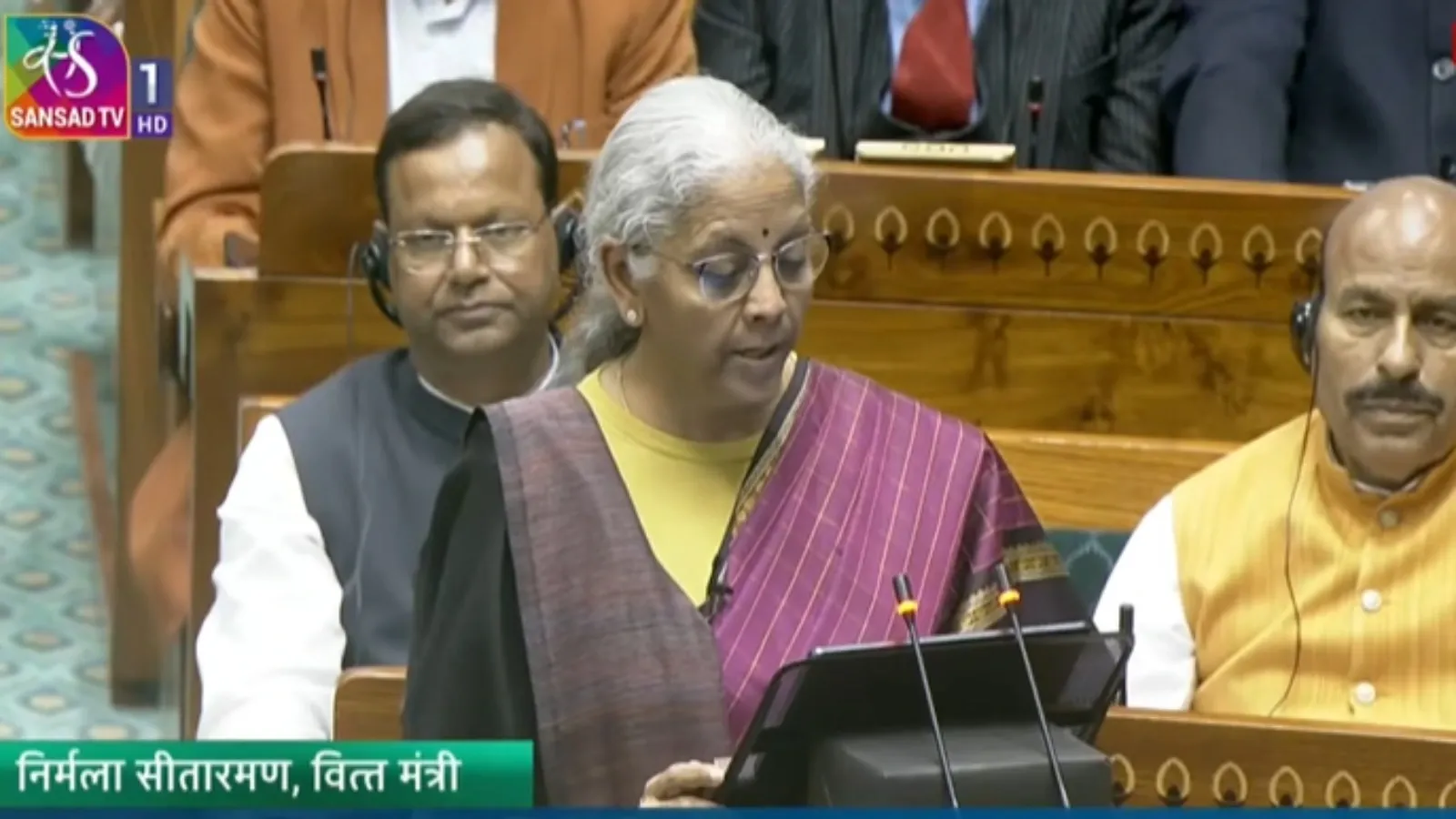
New Delhi, Feb 1 (BVI) The Budget 2026 presented by Finance Minister Nirmala Sitharaman in Parliament today evoked divergent reactions from experts and industry leaders.
Some of these reactions are:
Manoj Purohit, Partner, Financial Services Tax, Tax & Regulatory Advisory, BDO India:
“The much-awaited amendment has been proposed in Budget 2026 to open up the Indian capital markets for Persons Resident Outside India (PROIs).
Indian non-residents understand the sentiment of the Indian capital markets and are keen to invest in them. This welcoming measure will not only increase inflows but also help stabilise the currency and capital markets.
For MSMEs, the proposed impetus in the Budget 2026 across various fronts will attract capital from foreign investors.
Foreign investors would now look to MSMEs as an additional investment avenue, thereby making MSME IPOs more lucrative in attracting foreign capital.
The allocation of INR 10K crore to the SME Growth Fund will boost small and medium enterprises, making them the most preferred alternative to large MNC offshore institutions and making India a self-reliant economy in the coming years.
This could also enhance the AIF ecosystem for investments in this segment.
——————————————————-
Dhruv Chopra, Managing partner at Dewan P N Chopra and Co, on Tax announcements:
In a move aimed at easing the financial burden on the middle class and students, the Union Budget 2026–27 has formally implemented the increase in the Tax Collected at Source (TCS) threshold for the Liberalised Remittance Scheme (LRS).
The exemption limit has been raised from ₹7 lakh to ₹10 lakh per financial year, meaning no tax will be collected upfront on most foreign remittances within this limit.
This change significantly improves cash flow for families managing overseas expenses, as funds are no longer “locked” in the tax system until a refund is filed.
Furthermore, the budget has completely abolished TCS on education remittances funded by loans from specified financial institutions, regardless of the amount.
For self-funded education and medical treatments, a lower TCS rate of 5% applies only on the amount exceeding the ₹10 lakh threshold.
Other discretionary remittances, such as overseas investments or gifts, now attract a 20% TCS once the new ceiling is breached.“
Deepashree Shetty, Partner, Global Mobility Services, Tax & Regulatory Advisory, BDO India:
The proposed amendments in *Foreign Asset Reporting (FAR)* brings more self-governance on individual taxpayers to ensure that the income from foreign assets and the assets itself are reported appropriately to avoid additional tax penalty levies. With the announcement of Foreign Asset Disclosure Scheme, taxpayers would be entrusted with financial transparency and compliance.
Gyanendra Tripathi, Partner & Leader – Indirect Tax : North & West, Tax & Regulatory Advisory, BDO India
“Proposal to launch *Bio-Pharma Shakti* with an outlay of ₹10,000 crore underscores a clear policy intent to deepen India’s presence in high-value biologics and biosimilars.
By focusing on domestic manufacturing capacity, regulatory strengthening, and supply-chain resilience, the initiative aims to improve India’s competitiveness in global bio-pharma markets at a time of rising demand and supply-chain diversification.”
Munjal Almoula, Managing Partner, Tax & Regulatory Advisory, BDO India:
Currently, IT/ITES companies are facing significant litigation on inter-company transactions. The present safe harbour rates are also found to be on the higher side, dissuading companies from going down this route.
Whilst APA is an option, the time period for completion of the APA process has led to taxpayers in this sector facing significant uncertainty on their transfer pricing matters.
The fast-tracking of APAs and a reasonable safe harbour proposed for IT companies (transacting with their related parties) will provide greater certainty and encourage FDI in this sector.”
Manoj Purohit, Partner, Financial Services Tax, Tax & Regulatory Advisory, BDO India:
Relaxing compliance requirements for foreign asset disclosures up to INR 20 lakhs and retrospective immunity will provide ease of compliance for small taxpayers, who were otherwise required to disclose such assets in their tax returns and also faced rigorous penalties and prosecution.
The non-requirement of TAN for NRIs with respect to tax withholding on the sale of immovable property will ensure compliance and reduce hassles related to obtaining a TAN, which otherwise is not required to be obtained. It will enable taxes to be deducted and paid as per the PAN of the NRI during the sale of immovable property, thereby ensuring NRIs report their transactions.”
On Defence and Infra:
Jaikaran Chandock, Director, Balu Forge Industries Limited:
Budget 2026 lays down an ambitious roadmap for India’s manufacturing sector, anchored by a record ₹12.2 trillion infrastructure capex and a clear strategy to expand manufacturing’s share of GDP.
The enhanced focus on structural reforms, revitalising legacy industries and scaling advanced sectors signals a shift from incremental support to broad-based capacity building and competitiveness.
In addition, the allocation of ₹5.95 lakh crore to the defence sector for defence research, land systems and equipment further strengthens the manufacturing outlook, particularly for precision engineering and high-value domestic production.
Looking forward, the challenge now is in execution, translating intent into implementation that lowers input costs, accelerates skilling, and deepens technology adoption across supply chains.
If realised effectively, this Budget could be a catalyst for manufacturing to not only generate sustainable employment but also elevate India’s position as a globally competitive manufacturing hub in the coming decade.”
On Manufacturing & MSME sectors:
Smitha Shetty, Regional Director APAC, Achilles Information Limited:
Union Budget 2026 reinforces India’s intent to build long-term industrial competitiveness through stronger manufacturing depth and more resilient supply chains. Semiconductors Mission 2.0, dedicated rare earth corridors, and support for domestic chemical clusters reflect a clear focus on reducing import dependency in strategic sectors that are shaping global production systems.
The Budget also strengthens MSME growth with meaningful measures such as the ₹10,000 crore SME Growth Fund, additional micro-enterprise risk capital, and reforms that support working capital efficiency through receivables financing and procurement-linked mechanisms. Importantly, the ‘corporate mitras’ initiative can help strengthen compliance readiness without overburdening smaller suppliers, especially in Tier 2 and Tier 3 cities. In an uncertain global trade environment, this is a balanced and forward-looking Budget.”
Dr. Bijal Sanghvi, Managing Director, Axis Solutions Limited:
Budget 2026 sets a decisive direction for India’s manufacturing sector by reinforcing the ambition of Viksit Bharat through technology-led, sustainable growth.
The emphasis on advanced manufacturing, digital infrastructure, and green initiatives reflects a clear intent to build globally competitive yet responsible enterprises. Digital transformation, driven by IIoT, enables plants to operate with precision and foresight.
Integrated plant dashboards, supported by real-time data analytics and continuous monitoring, empower leadership with actionable insights; improving productivity, energy efficiency, and operational resilience.
Such capabilities are no longer optional; they are fundamental to achieving scale with consistency and compliance.
Sustainability, when combined with data-driven decision-making, ensures long-term value creation for industry, society, and the economy.
Budget 2026’s focus on innovation, skilling, and smart manufacturing provides industry leaders the confidence to invest in future-ready plants that are intelligent, transparent, and aligned with India’s journey toward inclusive and enduring industrial progress.”
On Manufacturing/Mining from Sanjay Choudhari, Chairman, SBL Energy Limited:
The Union Budget 2026-2027 points to a clear strategic response to the growing global trade tensions and supply-chain vulnerabilities.
By establishing dedicated rare earth corridors across mineral-rich states and supporting downstream processing, research, and manufacturing, the government is addressing one of India’s most critical dependencies – access to strategic materials dominated by global monopolies.
This initiative not only strengthens domestic capabilities but also provides a significant boost to the mining sector, incentivising exploration, commercial-scale extraction, and integration with downstream industries.
Apart from this, the parallel push to strengthen manufacturing across priority sectors, including the creation of dedicated chemical parks, reflects a shift from fragmented capacity to integrated industrial ecosystems.
To sum it all up, these measures reduce import dependence, build supply-chain resilience, and position India as a more reliable and competitive player in global manufacturing networks.” (BVI)
