

By Arun Kumar Das
New Delhi, Nov 20 (BVI) The Central government has asked all cities and urban local bodies to ensure that about 29,000 new restrooms are ‘aspirational’, with features like bathing cubicles and touchless flushing and breast-feeding rooms, and automatic sanitary napkin incinerators.
All those are to be indicated as “aspirational toilets” on Google Maps.
The demand for high-quality toilets is increasing due to increasing sanitation challenges in cities because of rapid urbanisation and rising migration.
The Union Housing and Urban Affairs Ministry has asked urban local bodies to expand public toilet infrastructure at tourist hubs, high-footfall zones and religious sites under the Swachh Bharat Mission 2.0.
The Mission has recommended that these upgraded facilities be classified as “Aspirational Toilets”, reflecting a shift towards modern, user-centric and environmentally sustainable sanitation amenities.
The ministry said the initiative aims to significantly improve the public toilet experience through smart features, accessible design, gender-neutral and child-friendly amenities, and green technologies.
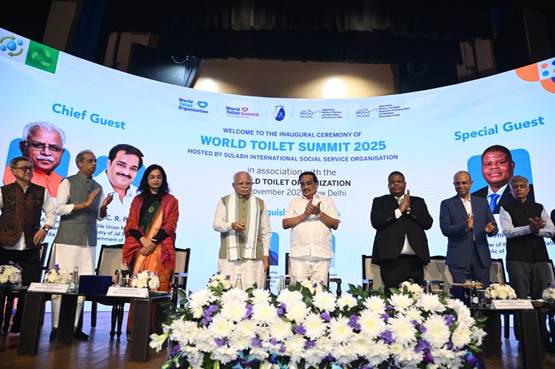
- Speaking at the World Toilet Summit 2025 hosted by the Sulabh International Social Service Organisation, Union Housing and Urban Affairs Minister Manohar Lal called for global cooperation on swachhata and sustainability.
He said, “Across India and around the world, better and cleaner toilet systems are being put in place. In our country too, mindsets are changing – and must change. After all, cleanliness is not judged by a tidy home or bedroom, but by the condition of one’s toilet.”
He stressed the need for wastewater treatment, reuse, cleaner toilets and faster behavioural change. He also underscored early sanitation habits in children and the importance of waste-to-wealth and circularity under Swachh Bharat Mission-Urban.
Welcoming delegates at the event, Kumar Dilip, president of Sulabh International, highlighted India’s pioneering contributions in sanitation innovation and community-led dignity.
The session also saw the release of “The World Toilet Organization 25th Anniversary Commemorative Book”.
Aligning with Prime Minister Narendra Modi’s vision, India has made significant progress in expanding universal and sustainable access to these essential services.
The Minister said, “Across India and around the world, better and cleaner toilet systems are being put in place. In our country too, mindsets are changing — and must change. After all, cleanliness is not judged by a tidy home or bedroom, but by the condition of one’s toilet”.
He stressed the need for wastewater treatment, reuse, cleaner toilets, and faster behavioural change. He also underscored early sanitation habits in children and the importance of waste-to-wealth and circularity under Swachh Bharat Mission–Urban.
The Inaugural Session of the World Toilet Day Summit saw participation from government, industry, international organisations, academia, innovators, and entrepreneurs to help chart a roadmap for a sustainable sanitation future. (BVI)
