
Today is 30th anniversary of arrival of mobile phone service in India

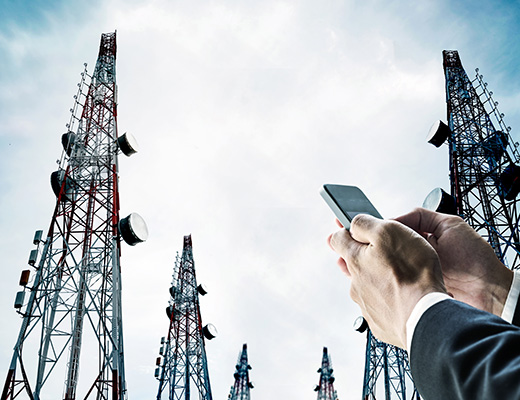
New Delhi, July 31 (BVI) It was this historic day 30 years back when India witnessed a massive revolution in the world of communication with the first mobile phone call being made.
The technology was already available in some developed countries after the global breakthrough was made on April 3, 1973 in New York when an official of Motorola company Martin Cooper made the world’s first cellphone call from a street.
In India, the D-day was July 31, 1995, when the then Chief Minister of West Bengal Jyoti Basu made the country’s first mobile phone call to Union Telecom Minister Sukh Ram using a Nokia set.
Some key telecom industry leaders like COAI, Nokia, HFCL, Comviva & MediaTek remembered the historic da, reflecting on the journey so far and the future ahead.
Tarun Chhabra, Sr. Vice President and Country Head of Nokia India, said, “We’ve played a pivotal role in India’s remarkable strides in technology and connectivity in recent decades.
“Our journey has witnessed several milestones, including first ever GSM call in India in 1995 on a Nokia phone over a Nokia supplied network, bringing 3G services in 2011, pioneering 4G/LTE technology in 2012, and introducing 5G to India in 2022.
“We stand as a major equipment supplier and technology partner for leading private and public operators, enterprises, and utility firms.”
Lt. Gen. Dr. S.P. Kochhar, Director General of Cellular Operators Association of India (COAI), said, “India’s telecom sector has witnessed a phenomenal transformation since the country’s first cellular call in 1995.”
He noted that India now stands as the world’s second-largest telecom market, boasting over 1.2 billion subscribers and some of the most affordable tariff rates globally.
“This affordability has connected millions, fueling the Digital India movement and stimulating growth across every sector,” he noted.
An Indian subscriber now uses over 21 GB of data each month on an average, which is a testament to the world-class infrastructure developed by leading Indian telecom operators, Lt Gen Kochchar said.
He pointed out that the introduction of 4G empowered millions with fast, reliable data to connect, create and thrive in the digital age, and the launch of 5G has taken this experience even further.
“Relentless efforts from the Government and the industry have ensured the reach of digital connectivity, even to villages that once remained off the digital grid. Moreover, India’s fastest rollout of 5G in the world has been nothing short of transformative,” he said.
“Today, over 85% of India’s population and over 99% of the districts in India enjoy access to 5G services, powering innovations from remote education to real-time city management and telemedicine to smart agriculture..
“India is not just a participant in this global revolution, it is further actively shaping the conversation around the future of 6G, setting benchmarks for digital inclusivity, innovation and leadership,” the DG of COAI said.
Anku Jain, Managing Director, MediaTek India, said, “Since the first phone call made in 1995 on a feature phone, India has evolved into the world’s second-largest 5G smartphone market.”
In recent years, the landscape has transformed dramatically, with approximately 85.5% of Indian households now owning at least one smartphone as of early 2025, Jain said.
“India’s swift adoption of advanced networks, from extensive 4G coverage to an accelerating 5G rollout projected to reach 980 million subscriptions by 2030, truly underscores the nation’s digital ambition and commitment to inclusive connectivity,” the MediaTek India MD said.
The smartphone itself has evolved remarkably, advancing from basic 2G devices to today’s 5G enabled, AI-powered handsets that drive innovation and empowerment across every segment.
“As India embraces its next wave of digital growth, MediaTek remains deeply committed to powering consistent connectivity, value and innovation for every user,” Jain said.
Mahendra Nahata, Managing Director of HFCL, said, “As we mark three decades since India’s first mobile phone call, we take immense pride in the remarkable transformation of the nation’s telecom landscape. What began as a modest service has evolved into one of the world’s most robust and dynamic telecom infrastructures.”
He said HFCL is privileged to be part of this journey, contributing innovative, reliable and indigenous solutions that empower connectivity across the nation.
The visionary push towards ‘Made-in-India’ by the government has been pivotal in accelerating the rise of homegrown telecom equipment manufacturers, he said.
“This initiative not only strengthens India’s self-reliance but also opens doors for global leadership in telecom technology. We remain committed to supporting India’s digital ambitions by driving innovation, quality and sustainability in every aspect of our operations.
“As industry pioneers, we believe India is poised to set new benchmarks in next-generation communications; built by Indian minds, for Indian needs and for the world.”
Rajesh Chandiramani, CEO of Comviva said, “As we commemorate 30 years of the first mobile phone call in India, it’s a moment of pride and reflection for Comviva. We were among the pioneers in value-added services (VAS) at a time when such offerings played a critical role in enhancing the early mobile experience; be it through SMS alerts, ringtones, or voice-based services.”
He said these innovations were the first step in transforming mobile phones from mere communication devices into powerful engagement tools.
“Since then, customer expectations have radically evolved, and so has the technology. From basic VAS to today’s hyper-personalized, AI-driven digital experiences, the journey has been nothing short of extraordinary.
“What once added value is now central to the customer journey. Personalization, immediacy, omni-channel presence and seamless integration have become the cornerstones of customer engagement in the digital age.” (BVI)
