
Namo Bharat and Delhi-Meerut Metro Service to be fully operational shortly

By Arun Kumar Das
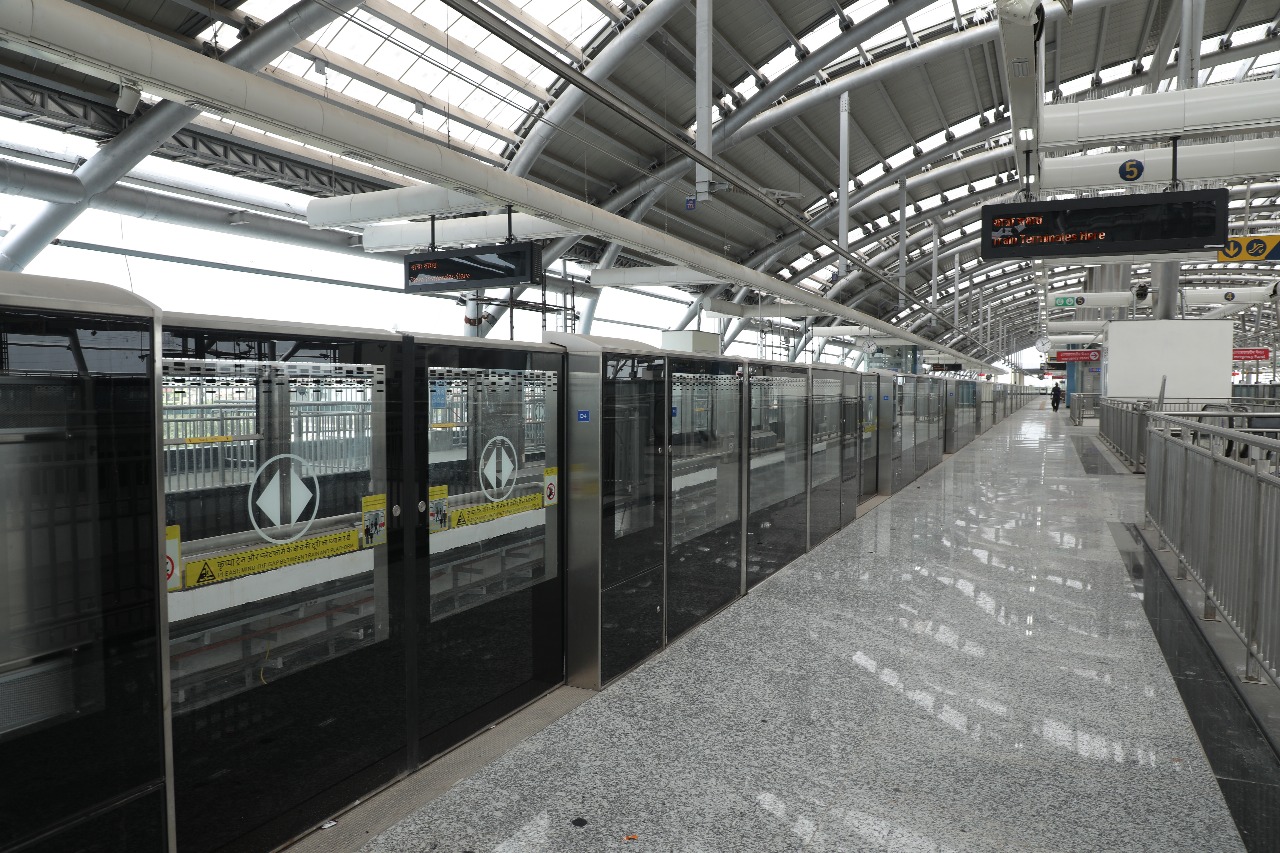
New Delhi, Sep 10 (BVI): The 82.15 km-long Delhi-Ghaziabad-Meerut Namo Bharat corridor, with 16 stations, is going to be fully operational shortly, a development which will make the journey from the national capital to the historic city of Meerut a speedy affair.
All necessary trials and permission have been obtained by the NCRTC, the executing agency of both Namo Bharat and Meerut Metro projects, said Salabh Goel, the Managing Director of NCRTC, the agency executing the project.
At present, a 55 km-section across 11 stations, from New Ashok Nagar to Meerut South, is operational, while a section in Delhi from Sarai Kale Khan to New Ashok Nagar (5km) and from Meerut South to Modipuram in Uttar Pradesh (21km) is soon to be commissioned, he said.
Goel also said that Meerut Metro Services, the local urban transit service, will be operated on the same infrastructure as Delhi-Ghaziabad-Meerut Namo Bharat Trains.
“It’s an integration with Namo Bharat service with Meerut Metro service, a first of its kind project where Metro as well as Namo Bharat train using the same track,” he said.
Meerut Metro will have 13 stations in the span of 23 km and run on the Namo Bharat network in Meerut.
This will provide the commuter swift change from one to the other without causing any discomfort and make the travel experience comfortable.
Goel said, “Because of Namo Bharat service, two new townships are being developed near Ghaziabad and Meerut. Since the travel time between Meerut and Delhi has been reduced to just 35 minutes, people in Meerut can easily commute to the Capital in the daytime and come back in the evening and they do not have to stay in Delhi.”
He further said Namo Bharat is the country’s first integrated transit system which will provide connectivity to Metro, railways network and provide seamless transport experience to passengers.
Strategically located Namo Bharat stations provide seamless multi- modal connectivity with other modes of transport like bus terminals, railway stations, airport and metro stations, ensuring smooth interchange between different modes for commuters. Prime examples of this are Sarai Kale Khan and Anand Vihar Namo Bharat Stations.
Namo Bharat, with its maximum operational speed of 160 kmph, has transformed daily commute across Delhi, Ghaziabad, Meerut, and surrounding areas, making it significantly faster, more comfortable and efficient.
Envisaged as a comprehensive solution to the issues pertaining to imbalanced development in the National Capital Region (NCR) in the past few decades and the problems resulting from it, the Centre decided for a regional rapid transit System (RRTS), India’s first Namo Bharat.
With a design speed of 180 kmph and a maximum operational speed of 160 kmph, Namo Bharat trains are a fast, comfortable, reliable and safe mode of transport, available every 15 minutes at the station.
This system is different from conventional Railway as it does not operate on a fixed timetable or require a seat reservation. It is also different from the metro transit service as it is catering to passengers looking to travel relatively longer distances with fewer stops and at a higher speed.
This mobility solution, connecting Delhi with major urban nodes in Uttar Pradesh is enabling sustainable and balanced development in the region, decarbonizing the region and reducing dependence on private vehicles by enabling faster connectivity which is covering around 90 kms in an hour.
The project is being implemented by the NCRTC, a joint venture of the Government of India (50%) and the state governments of Delhi, Uttar Pradesh, Haryana, and Rajasthan (12.5% each).
Once fully operational, it is estimated to increase the share of public transport to 63% from the earlier 37% on the Delhi–Meerut route, promoting a major shift from private vehicle usage.
It will significantly reduce travel time by 60% to 75%, bringing suburban areas within a comfortable 30 to 60-minute commute from the National Capital. This time efficiency will create immense opportunities for the working population, industrial workforce, intercity travellers, and students.
Improved connectivity and affordability will help decongest urban areas, promoting suburban housing, and boosting polycentric development along the corridor. With the operations of a 55 km section of the corridor, the region has already started witnessing the transformation.
All Namo Bharat elevated stations and depots are being provided with solar panels and net metering system with the grid supply. This strategy will help in achieving the net zero energy concept which implies that most of the auxiliary power requirements will be met through solar energy.
NCRTC is targeting to generate about 15 MW peak in-house solar power on the rooftop of stations, depots and other buildings for non-traction purposes. Out of this, solar power plants of 4.5 MW capacity have already been commissioned.
A total of 8 corridors has been identified, of which 3 corridors – Delhi to Meerut, Delhi to Alwar and Delhi to Karnal – are being taken up for development in the 1st phase.
Delhi-Meerut Namo Bharat Corridor is the first to be implemented amongst them.
All the 3 corridors of Phase-1 will converge at Sarai Kale Khan and will be interoperable, enabling commuters to travel end to end from one corridor to another without having to change trains. (BVI)
