
Govt approves 3 multi-tracking rail projects worth over Rs 18,500 cr

By Arun Kumar Das
New Delhi, Feb 14: The government has approved three multi-tracking projects covering 12 districts across Delhi, Haryana, Maharashtra and Karnataka, increasing the existing network of Indian Railways by about 389 Kms at an estimated cost of about Rs 18,509 crore.
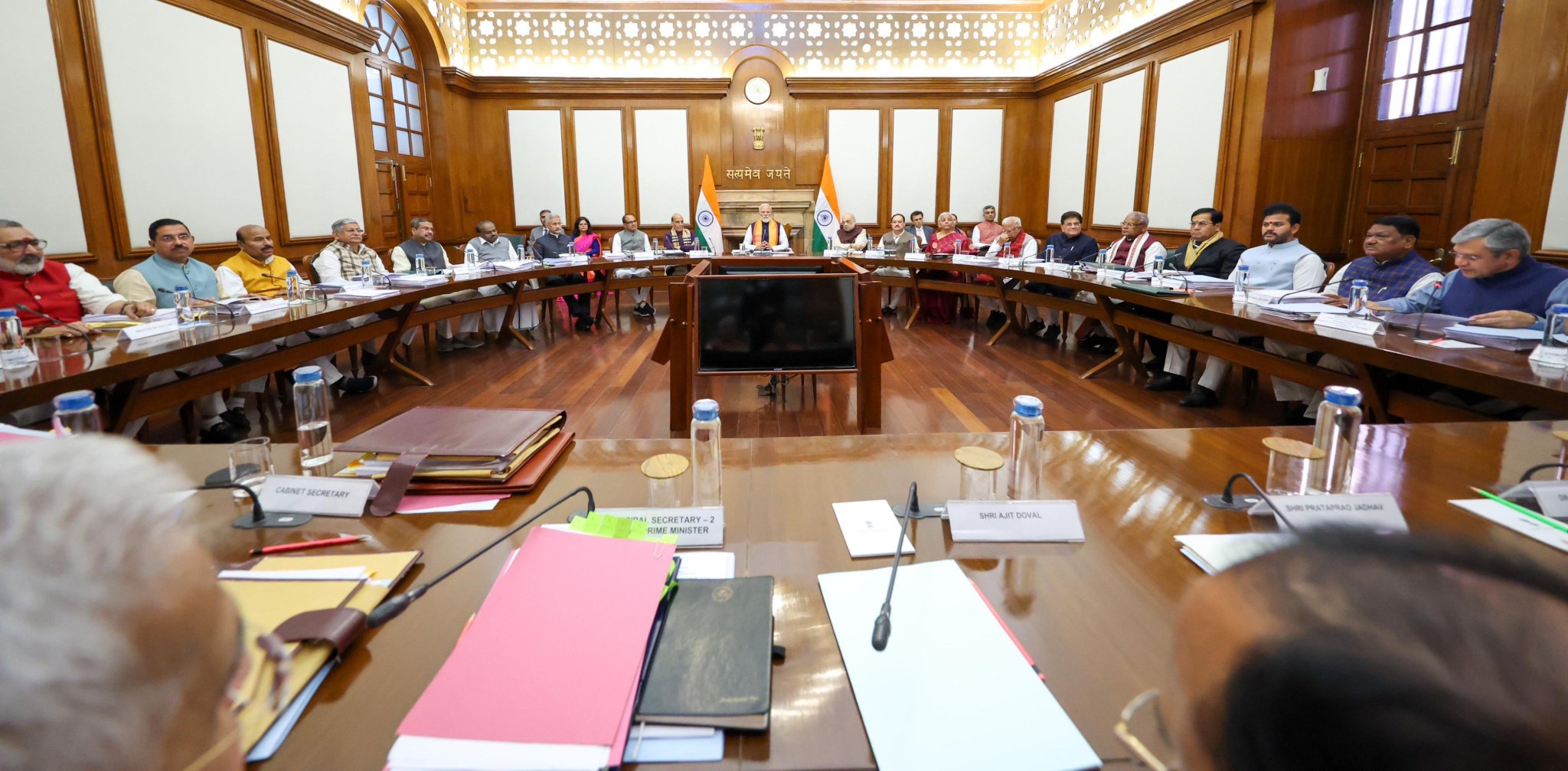
The projects, Kasara–Manmad 3rd and 4th line, Delhi–Ambala 3rd and 4th line and Ballari–Hosapete 3rd and 4th line, were cleared at a meeting of Cabinet Committee on Economic Affairs, chaired by Prime Minister Narendra Modi yesterday.
The projects are expected to be completed by 2030-31.
The increased line capacity will significantly enhance mobility, resulting in improved operational efficiency and service reliability for Indian Railways.
The projects are planned on PM-Gati Shakti National Master Plan with focus on enhancing multi-modal connectivity and logistic efficiency through integrated planning and stakeholder consultations.
The proposed multi-tracking project will enhance connectivity to approximately 3,902 villages, which have a population of about 97 lakhs.
The proposed capacity enhancement will improve rail connectivity to several prominent tourist destinations across the country, including Bhavli Dam, Shri Ghatandevi, Trimbakeshwar Jyotirlinga, Shri Mata Vaishno Devi Katra/Srinagar, and major attractions such as Hampi (a UNESCO World Heritage Site), Ballari Fort, Daroji Sloth Bear Sanctuary, the Tungabhadra Dam, Kenchanagudda, and the Vijaya Vittala Temple etc.
The proposed projects are essential routes for transportation of commodities such as coal, steel, iron ore, cement, limestone/bauxite, container, foodgrains, sugar, fertilizers and petroleum products among others.
The capacity augmentation works will result in additional freight traffic of magnitude 96 MTPA (Million Tonnes Per Annum).
The Railways being environment friendly and energy efficient mode of transportation, will help both in achieving climate goals and minimizing logistics cost of the country, reduce oil import (22 crore Litres) and lower CO2 emissions (111 crore Kg) which is equivalent to plantation of 04 (Four) crore trees. (BVI)
