
Bullet Train Project: 5-year delay causes huge cost escalation

By Arun Kumar Das
New Delhi, Jan 2 (BVI): Delayed by five years, the cost of the ambitious bullet train project is touching Rs 1.98 lakh cr as against the initial estimation of Rs 1.08 lakh cr in 2016.
The cost of the Mumbai-Ahmedabad high speed rail corridor project is estimated to be around Rs 1.98 lakh cr now, said Chairman Railway Board Satish Kumar at the PRAGATI (Pro-Active Governance and Timely Implementation) briefing on Friday here.
India’s first bullet train project envisages to reduce the travel time between Mumbai and Ahmedabad and is expected to take just 1 hour 58 minutes. The work on the 508 km long Mumbai-Ahmedabad High Speed Corridor is going on and the partial opening is slated to be in August 2027.
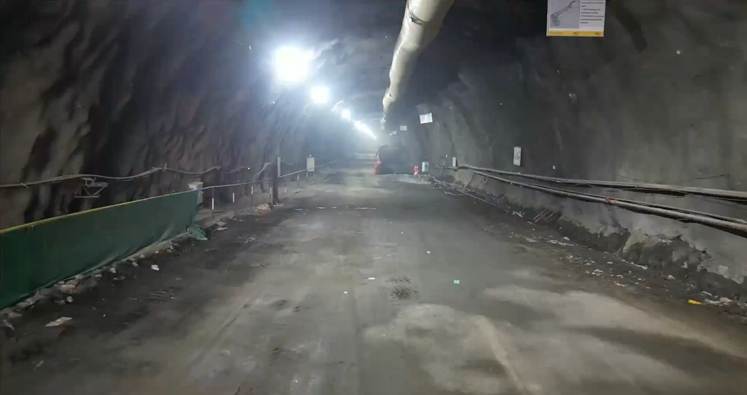
Meanwhile, the project achieved a significant milestone with the breakthrough of the second tunnel at Palghar in Maharashtra. This is the first mountain tunnel of the project in the state.
The breakthrough has been achieved in an about 1.5 km long mountain. The tunnel was excavated from both ends and the excavation was completed within 18 months using a cutting-edge drill and blast method. This method allows real-time monitoring of ground behaviour during excavation and enables the deployment of support systems such as shotcrete, rock bolts, and lattice girders based on actual site conditions.
The high speed corridor covers 508 kilometres, covering 352 km in Gujarat and Dadra & Nagar Haveli, and 156 km in Maharashtra. The corridor will connect major cities including Sabarmati, Ahmedabad, Anand, Vadodara, Bharuch, Surat, Bilimora, Vapi, Boisar, Virar, Thane, and Mumbai, marking a transformative step in India’s transportation infrastructure.
The 508 km corridor has an overall tunnel length of 27.4 km, of which 21 km comprises underground tunnels and 6.4 km surface tunnels. The project includes eight mountain tunnels, with seven tunnels in Maharashtra having a combined length of about 6.05 km, and one tunnel of 350 metres located in Gujarat.
The project is expected to foster economic activity along the corridor, facilitate knowledge transfer, and support the development of new industrial and IT hubs. The Union Minister noted that it will bring long-term economic gains and cater to the aspirations of the middle class by offering comfortable and affordable travel. (BVI)
