

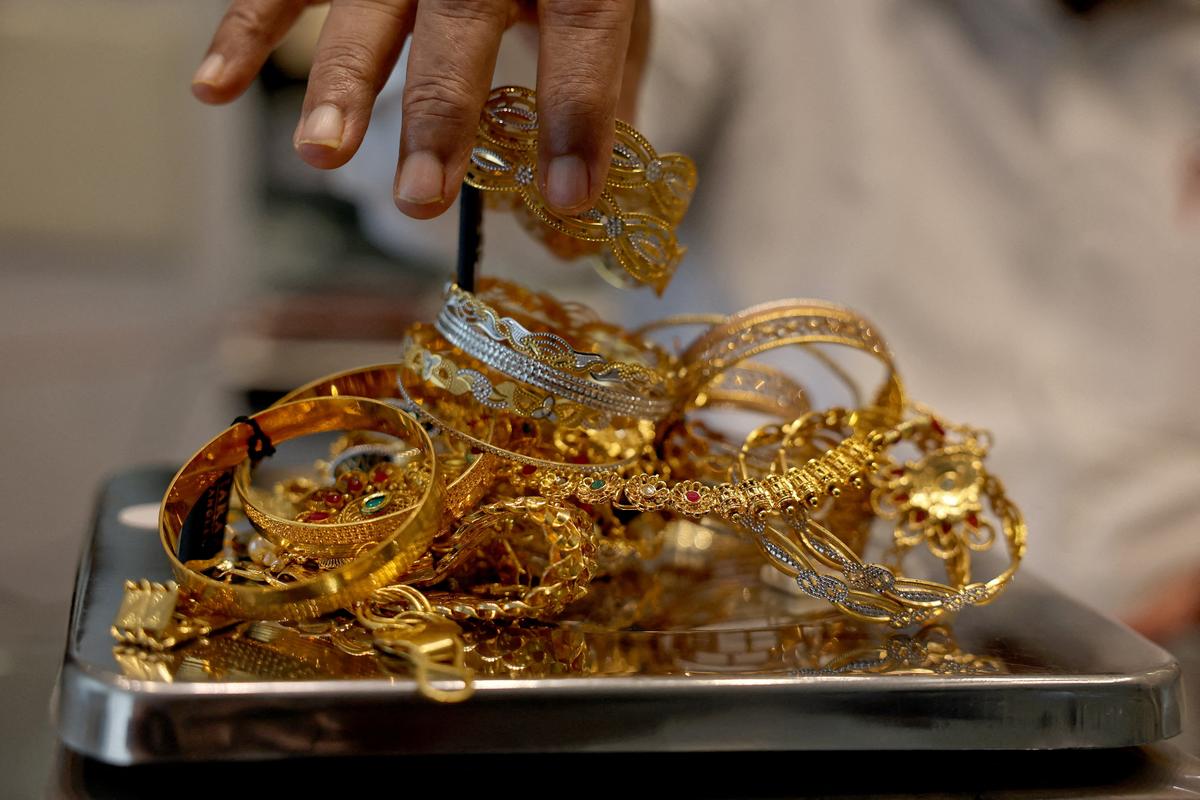
New Delhi, Sept 16: Even as controversy continues over charges on UPI transactions, Gold hallmarking fees have also been hiked sharply by 67 per cent, causing anger among the jewellery business community.
The fee payable by jewellers to recognised Assaying and Hallmarking Centres (AHCs) for gold articles has been increased from Rs 45 to Rs 75 per article with effect from September 14 under the BIS (Hallmarking) Amendment Regulations, 2026.
The All India Gem & Jewellery Domestic Council (GJC) has called the sharp increase as unwarranted and urged the Government and the Bureau of Indian Standards (BIS) to immediately review the decision.
GJC said it supports hallmarking as an important mechanism for purity assurance, transparency and consumer protection, but argued that the sharp increase in mandatory compliance costs requires a transparent assessment of the underlying cost structure.
The Council pointed to the substantial expansion in hallmarking volumes and geographical coverage.
According to Government data cited by GJC, more than 60 crore gold articles were hallmarked with HUID between 1 July 2021 and 5 March 2026, while mandatory hallmarking had expanded to 380 districts by March 2026.
GJC said the increase in volumes should ordinarily provide scope for greater efficiency and economies of scale, and questioned the need for a 67 per cent increase in the per-article charge.
The industry body said the increase in the prescribed fee does not address what it described as existing issues within the hallmarking ecosystem.
GJC said it had received industry feedback about aggressive discounting, commercial inducements and competition among some service providers to secure hallmarking volumes.
It argued that where the prescribed rate is not uniformly realised in practice, raising the notified fee may not address the underlying viability and governance issues.
The Council also highlighted recent BIS enforcement actions concerning alleged fake hallmarking, unauthorised operations and non-compliant jewellery. These include actions in Chennai, Hyderabad, Ahmedabad, Assam and other locations.
According to GJC, such cases underline the need for stronger surveillance and enforcement alongside efforts to improve the economics of legitimate compliance.
GJC also raised concerns about the impact of the revised fee on lightweight jewellery. Hallmarking charges are levied per article irrespective of the weight of the jewellery, meaning the Rs 75 fee applies to both a one-gram article and a substantially heavier piece.
The Council said this creates a proportionately higher burden for lightweight and lower-value jewellery, particularly at a time when gold prices remain elevated. It added that the higher fixed compliance cost could eventually be reflected somewhere across the jewellery value chain.
Rajesh Rokde, Chairman, GJC, said the industry’s support for hallmarking should not be interpreted as acceptance of a substantial increase in mandatory compliance costs without examination.
“GJC and the jewellery industry have consistently supported hallmarking because purity assurance and consumer confidence are fundamental to our trade. But support for hallmarking does not mean that a nearly 67% increase in the cost of mandatory compliance should pass without examination,” he said.
Rokde added that the industry should understand why the per-article charge needs to increase from Rs 45 to Rs 75 at a time when hallmarking volumes have expanded significantly.
Avinash Gupta, Vice Chairman, GJC, said compliance needed to remain commercially sustainable. “If the compliant route becomes progressively more expensive while informal and unauthorised channels continue to operate, the differential between the two widens,” Gupta said.
He also pointed to industry concerns over discounting and commercial inducements in the hallmarking market, arguing that the underlying economics should be examined before a higher prescribed fee is implemented.
GJC has urged the Government and BIS to keep the Rs 75 charge in abeyance and retain the existing Rs 45-per-article fee until a comprehensive review is completed.
The Council has also called for a transparent cost study covering the capital and operating costs of AHCs, capacity utilisation, volumes and reasonable returns. It wants the actual charges being realised by AHCs, including discounts and rebates, to be examined.
GJC has further sought stronger enforcement against fake hallmarking, unauthorised AHCs, misuse of the BIS logo and jewellery sold without valid HUID. The Council has called for consultation with jewellers, manufacturers and AHCs before any substantial revision in mandatory compliance costs, as well as consideration of whether increased volumes and capacity utilisation could deliver economies of scale.
It has also proposed examining a more differentiated mechanism for lightweight and lower-value jewellery, where a uniform per-article fee can have a proportionately greater impact. GJC said its position was not against hallmarking, but focused on ensuring that the system remains affordable for compliant businesses while enforcement makes non-compliance commercially unattractive. (BVI)
