
India’s textile contribution remains low at global level; Bangladesh, Vietnam ahead

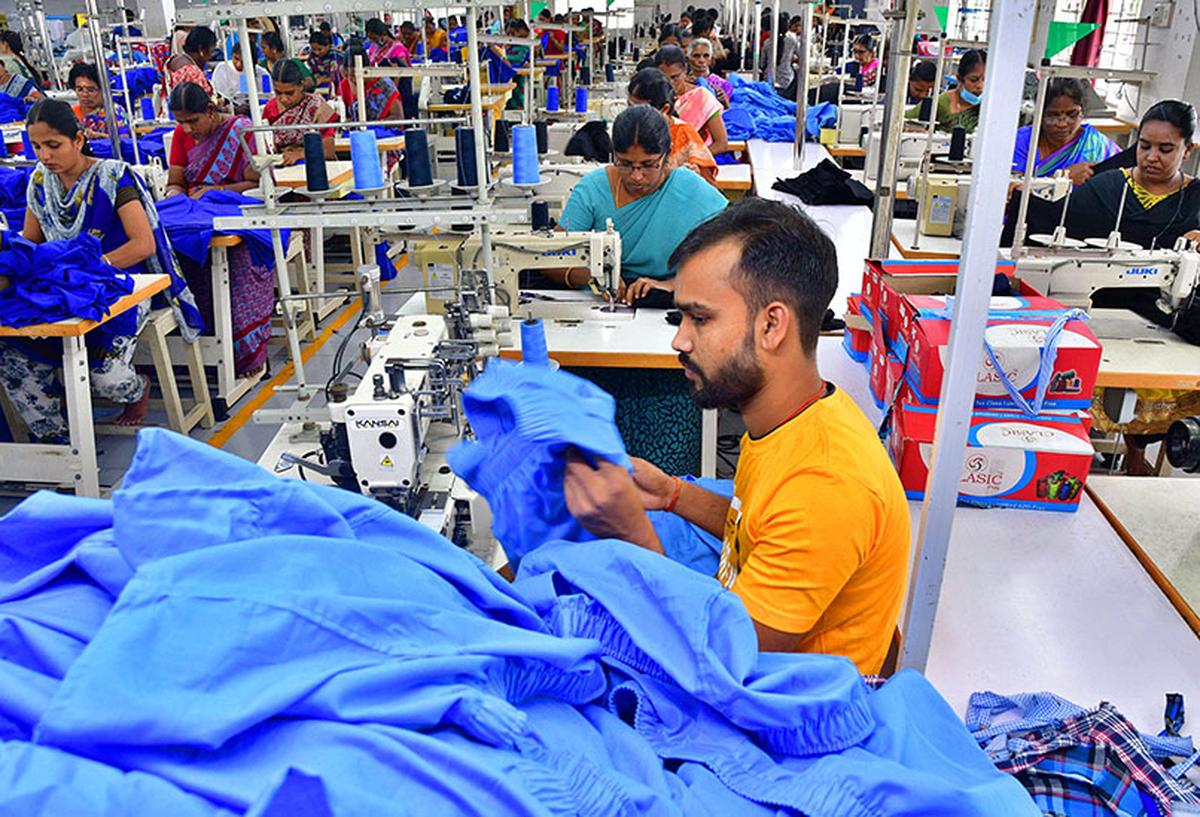
New Delhi, Sept 4: India accounted for 4.1 per cent of global textile and apparel trade in the Financial Year 2025, with exports of USD 37.7 billion.
Apparel exports stood at USD 15.7 billion.
The gap reflects weaknesses in manufacturing scale, productivity, product mix and supply-chain responsiveness, according to experts.
The competitive gap is particularly visible in apparel, where India’s share of global exports is roughly 3 per cent, compared with 9.5 per cent for Bangladesh and 7.3 per cent for Vietnam, according to an ICRIER report.
As global textile and apparel sourcing shifts towards larger, faster and more integrated manufacturing bases, India is under pressure to turn its raw-material advantages and established textile ecosystem into greater export value.
China’s apparel exports fell 5 per cent to USD 151.2 billion in 2025, even as its textile exports rose 0.5 per cent to USD 142.6 billion, according to China Customs data.
The divergence points to China’s continued strength in upstream textile production even as its apparel exports face pressure from shifting sourcing patterns, rising costs and trade uncertainties.
Vietnam’s rise in apparel exports also highlights the scale of the competitive challenge facing India.
Vietnam has established itself as one of the world’s largest apparel exporters, with its export model built around large-scale manufacturing and deep integration with global brands and sourcing networks.
Bangladesh, meanwhile, is approaching an important transition as it moves towards graduation from least-developed-country status, which will eventually phase out some of its preferential trade advantages.
That transition could prompt global brands and sourcing platforms to reassess their supply-chain footprints and create an opening for competing manufacturing bases such as India.
The US tariff escalation of 2025 also underscored the vulnerability of India’s export sector to changes in market access.
The 50 per cent tariff imposed that year put significant pressure on textile and apparel exporters, many of whom absorbed part of the additional cost to protect relationships with American buyers, before the US reduced the tariff on Indian goods to 18 per cent in February 2026.
The scale difference is reflected in factory sizes. The average registered Indian garment unit employs just 131 workers, while export-oriented Indian facilities typically employ 600–800 workers and Bangladeshi factories average about 1,200 workers, according to ICRIER.
But the capacity gap extends beyond factory size. A study by Vector Consulting Group estimated that India is missing out on an additional USD 3–7 billion in apparel exports due to poor coordination across its textile supply chain, arguing that better planning and execution could raise garment exports to $19–23 billion without significant fresh capacity investment.
Synthetic fibres accounted for 71.7 per cent of global fibre demand in 2025, compared with 21.1 per cent for cotton. Cotton’s share has fallen sharply from 68.3 per cent in 1960, while synthetics have risen from 4.6 per cent over the same period. (BVI)
