
No assessment made about percentage of vehicles compatible with E20 petrol: Govt

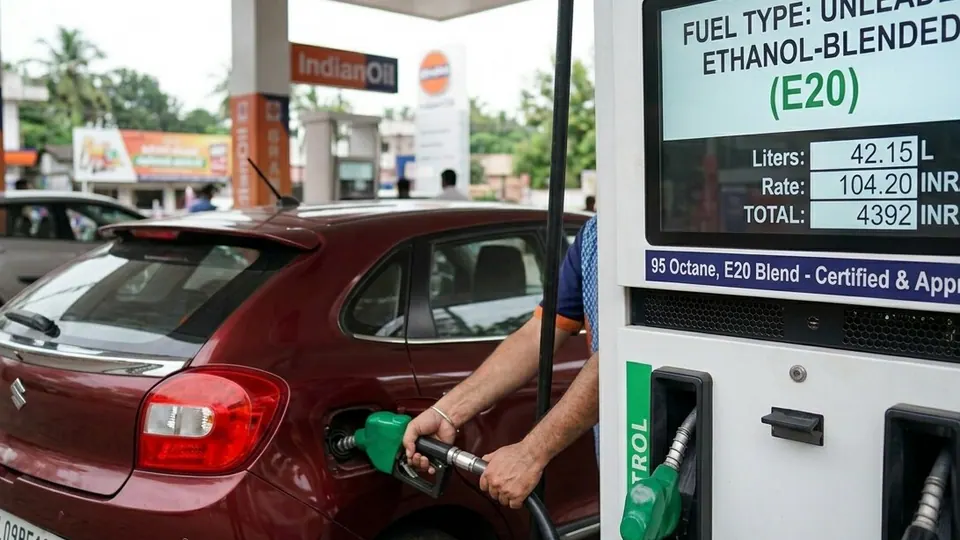
New Delhi, July 28: The government has conducted no assessment regarding the percentage of vehicles currently compatible with E20 Petrol.
This has been stated by Minister of State for Petroleum and Natural Gas Suresh Gopi in a written reply in the Rajya Sabha amidst widespread complaints about vehicles facing problems due to E20 fuel, which contains 20 per cent ethanol and 80 per cent petrol.
Motorists and automobile experts have been saying that E20 petrol damages engines, and reduces mileage, leading to much escalated costs of maintenance and travel.
The minister said the Ethanol Blended Petrol programme has been implemented through a phased and scientifically validated process involving NITI Aayog, automobile manufacturers, oil marketing companies and technical institutions.
These include the Automotive Research Association of India, Society of Indian Automobile Manufacturers and Indian Institute of Petroleum.
According to the minister, laboratory studies and field trials have examined engine durability, drivability, startability, corrosion resistance, material compatibility, emissions and fuel efficiency.
He said the studies confirmed E20 was safe for use and found no significant variation in performance or abnormal wear and tear in legacy vehicles.
Gopi said E15+ blended petrol has been in widespread use for more than three-and-a-half years, while E19-E20 fuel has been used for more than two-and-a-half years.
More than 20 crore two-wheelers and over 3 crore petrol cars have operated on these blends during this period.
The minister said there was no verified evidence of widespread engine failure or vehicle breakdown attributable to ethanol blending.
He also said automobile manufacturers continue to honour warranty obligations for vehicles using E20 fuel.
Ethanol Capacity, Foodgrain Use
Gopi said ethanol production capacity created in the country has been planned not only to meet the current requirement for E20 blending but also future growth in petrol demand.
The capacity is also intended to provide operational flexibility during seasonal variations in feedstock availability.
The minister said the capacity could support higher ethanol blends, flex-fuel vehicles and other emerging biofuel applications as and when approved by the government. He added that the Centre follows a diversified feedstock strategy under the National Policy on Biofuels.
Ethanol is produced from multiple approved feedstocks, including sugarcane-based sources, maize, damaged foodgrains, broken rice and foodgrains unfit for human consumption, Gopi said.
The list also includes surplus foodgrains approved by the National Biofuel Coordination Committee and other approved agricultural feedstocks.
Gopi said diversion of foodgrains for ethanol production is carefully calibrated in consultation with the Department of Food and Public Distribution and other concerned ministries.
Food security, PDS requirements, NFSA obligations, other welfare schemes and prescribed buffer stocks are accorded the highest priority, he added.
Only surplus foodgrains remaining after these requirements are met are permitted for ethanol production, according to the minister.
This forms part of the government’s diversified feedstock strategy for meeting ethanol requirements under the biofuel programme. (BVI)
