
Operation of India’s first Hydrogen-powered train soon

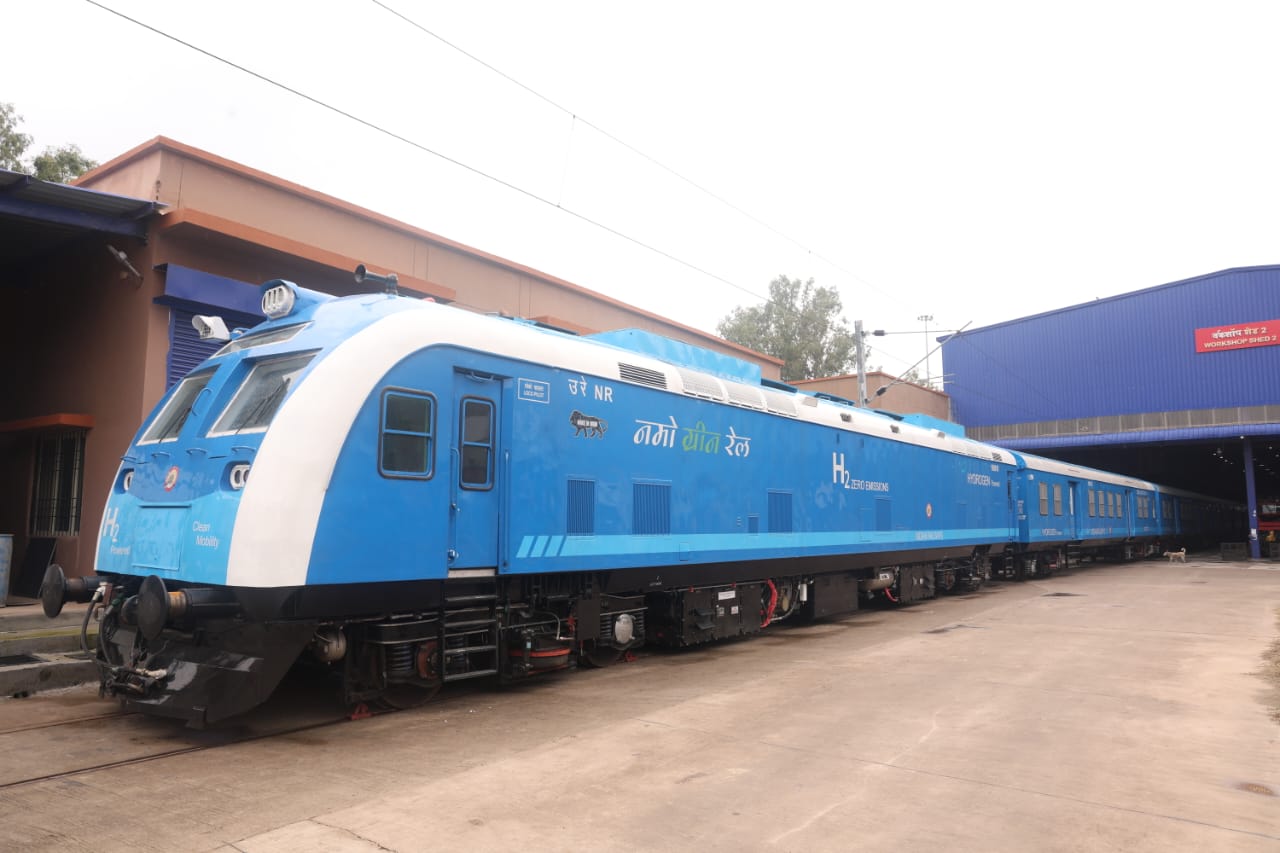
New Delhi, July 12: India’s first Hydrogen-powered train is expected to be rolled out soon for commercial operations, marking a major step towards green and sustainable transportation.
Indian Railways has approved the introduction of a 10-car Hydrogen Fuel Cell-based trainset on the dedicated Jind-Sonipat section of Northern Railway and the launch date is expected to be July 17.
The trainset will be powered by a 1200 KW hydrogen fuel cell propulsion system and operate at a maximum speed of 75 kmph.
The train has been manufactured by the Integral Coach Factory (ICF), Chennai.
With its introduction into service, India will join a league of countries which operate hydrogen-powered trains, including the US, Germany, Sweden, Japan, and China.
The train is planned to operate on the Jind-Sonipat route in Haryana, covering an 89-km section under the administrative jurisdiction of Northern Railway’s Delhi Division.
The train will run daily and will halt at 13 railway stations — Jind City, Pandu Pindara, Lalit Khera, Bhambeva, Ishapur Kheri, Butana, Khandrai, Gohana, Rabhra, Lath, Mohana Haryana, and Barwasni.
Hydrogen Fuel Technology
Hydrogen-based rail systems are increasingly being recognised globally as a promising solution for sustainable mobility.
Hydrogen fuel cell technology generates electricity through a chemical reaction using hydrogen, with water vapour as the only emission, making it a clean alternative to conventional fossil fuel-based traction systems.
As the technology is still at a nascent stage, only a limited number of countries are currently operating or testing such systems.
An indigenous hydrogen storage and refuelling facility has been set up at Jind for the train-set. The Petroleum and Explosives Safety Organisation (PESO) has granted the required licence for storage and dispensing of compressed hydrogen gas at the site.
A hydrogen compression system has been provided for refuelling operations, along with necessary technical support and critical spares to ensure reliable and fail-safe functioning. Provision of a standby compressor unit is also being ensured.
Various safety sensors, including hydrogen leak detectors and flame detectors installed at the hydrogen production, storage and dispensing facility, will be regularly inspected and cleaned to prevent dust accumulation and ensure safe operation.
Operation and Maintenance:
Operation and maintenance manuals for the hydrogen train-set and hydrogen plant, duly approved by RDSO, are also being made available.
Necessary safety provisions, regular audits and standard operating procedures are being ensured for the proposed maintenance facility at Shakurbasti.
The approval also mandates comprehensive safety and operational protocols, including 24×7 monitoring of the hydrogen refuelling system, deployment of trained and certified personnel for critical operations, and regular inspection and maintenance schedules.
During the initial phase of operations, trained technical staff will accompany the train to ensure smooth functioning. (BVI)
