

UNICEF Article
By Sonia Sarkar
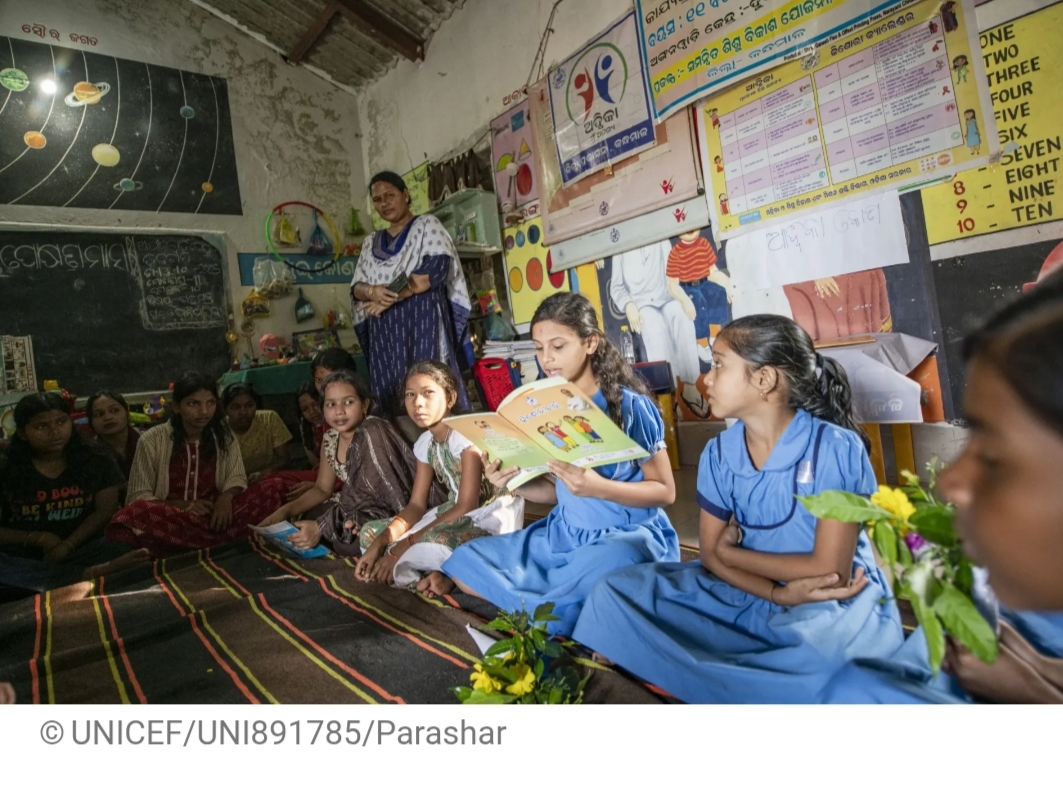
As the winding paths of Kandhamal, a deeply forested tribal district in eastern India’s state of Odisha, lead us through the Eastern Ghats to the Dutimendi and Dutipada schools, celebration hums softly in the air. A quiet transformation is unfolding in spaces that were once silent.
Across Odisha, child marriage rates have fallen, driven partly by the powerful ripple effects of visionary developmental programmes. The Government’s national Swachh Bharat Mission laid the foundation by providing toilets in schools, helping girls stay in class with dignity. Building on this, ADVIKA — the state’s flagship adolescent empowerment initiative under the State Strategic Action Plan to End Child Marriage, supported by UNICEF and UNFPA — now reaches more than 2.5 million adolescents across all 30 districts. By linking health, education, rights, and menstrual dignity, it weaves these gains into a single, compelling story of empowerment for every young person.
Menstrual Health Management (MHM) Corners in schools and confidence
In this tribal region, menstruation was spoken about in hushed tones for generations—often becoming a reason for silence, school absence, or early marriage. Many girls would drop out of school or miss classes during their periods. The onset of puberty was traditionally marked by community celebrations, but it also signalled the initiation of marriage for young girls.
Challenging these deeply entrenched beliefs, the ADVIKA programme and Menstrual Hygiene Management (MHM) initiatives in tribal Kandhamal are creating new opportunities for girls—helping them stay in school, and shape a different future.
At Dutimendi Panchayat High School, Payal, a Grade 9 student, remembers when menstruation meant missing class. “Earlier, I used to stay home whenever I got my period. I felt embarrassed. Now the MHM corners give us a private space, toilets to change and pads,” she says.
Here, the MHM corner, a clean, private space beside the girls’ toilet, offers sanitary pads, safe water, disposal bins, and educational posters in Odia and tribal dialects. With guidance from Headmaster Niranjan Jena and Ramakanta Nanda, the corner is more than a facility; its inclusion is made visible. UNICEF’s technical support ensured it became part of school life, not just a one-time intervention.
Shipra Saxena, WASH Specialist, UNICEF Odisha, said, “The space of privacy, dignity, and interaction that the girls have — the fact that they are continuing their education with confidence — shows that the initiative is working. They now have access to pads, space for disposal, and a space for discussion. The girls are happy; it is their self-space.”
Teachers Who Led the Change
At Dutipada Government High School, Headmistress Ambica Pradhan and teacher Ms. Khuntia began with conversations, not construction.
“It wasn’t enough to build a corner,” Pradhan recalls. “We had to make it meaningful. Girls had to feel safe there. Today, they do.”
“Earlier, girls stayed home during menstruation,” Ms. Khuntia adds. “Now they come to school, attend sessions, and even share what they learn with their classmates.”
